Recherche-création pluridisciplinaire (Arts vivants / Art & Science / Écologie forensique) 2025
« Et si je suis désespéré, que voulez-vous que j’y fasse ? » — Günther Anders
Note d’intention conceptuelle
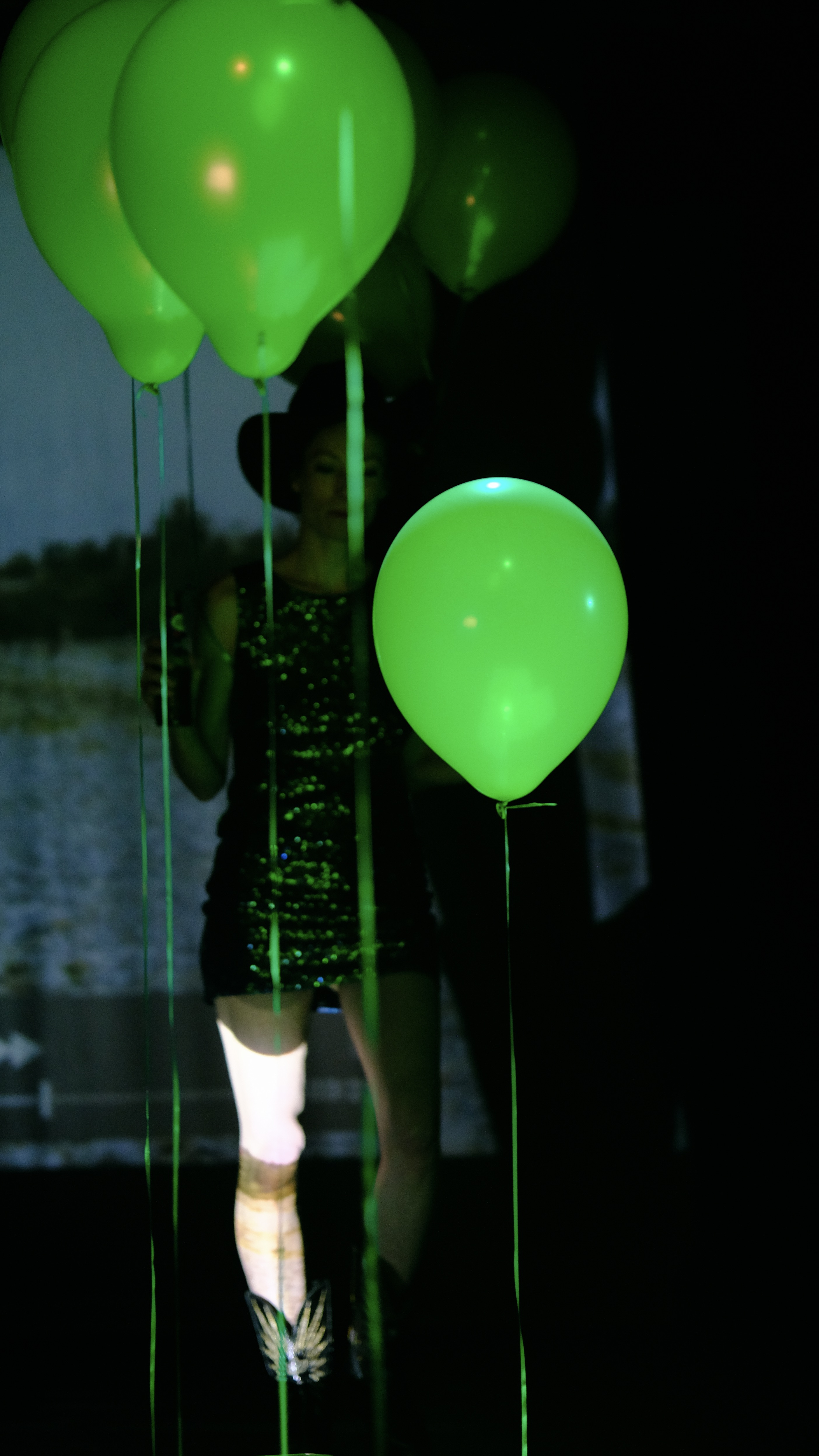
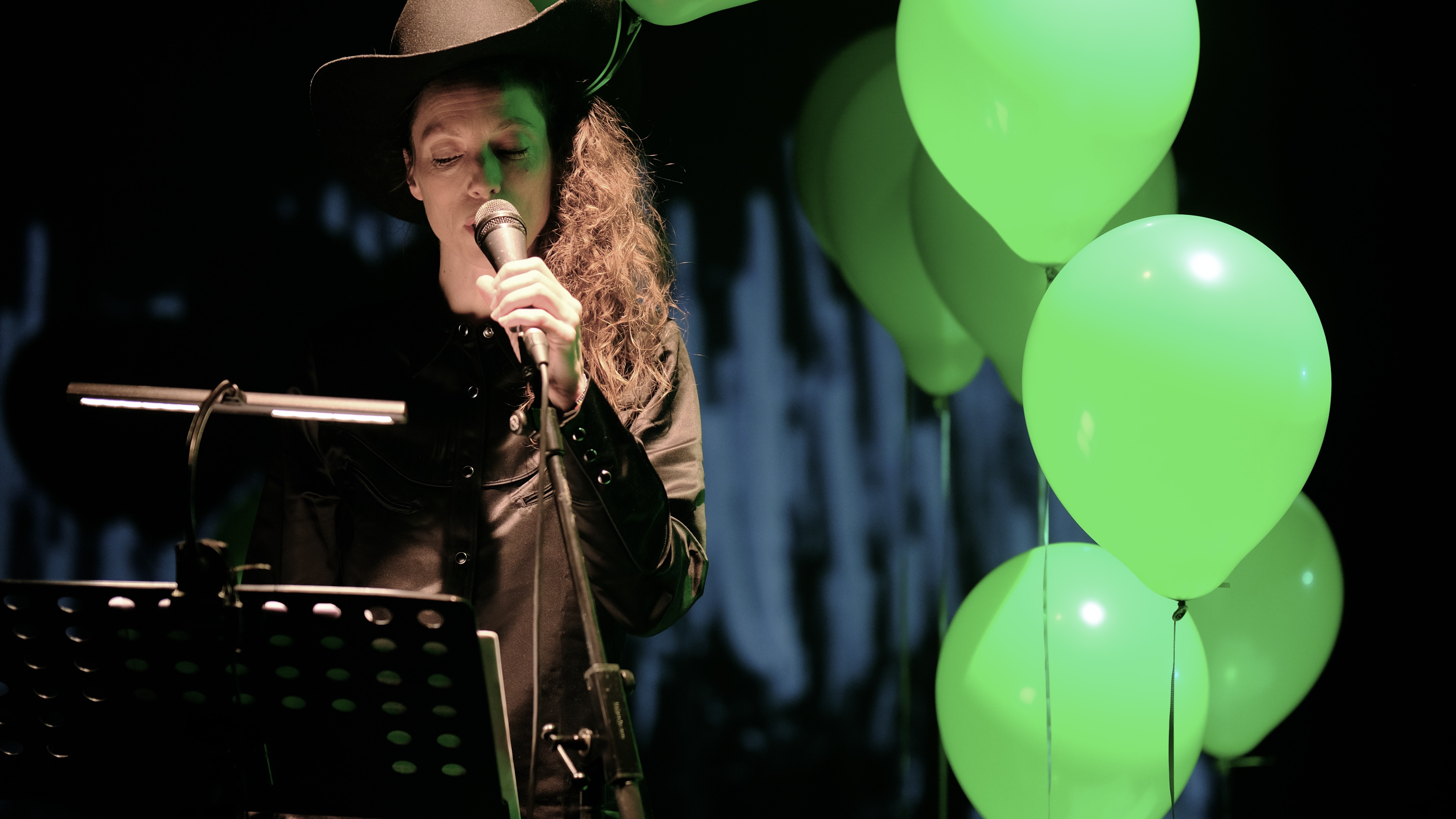
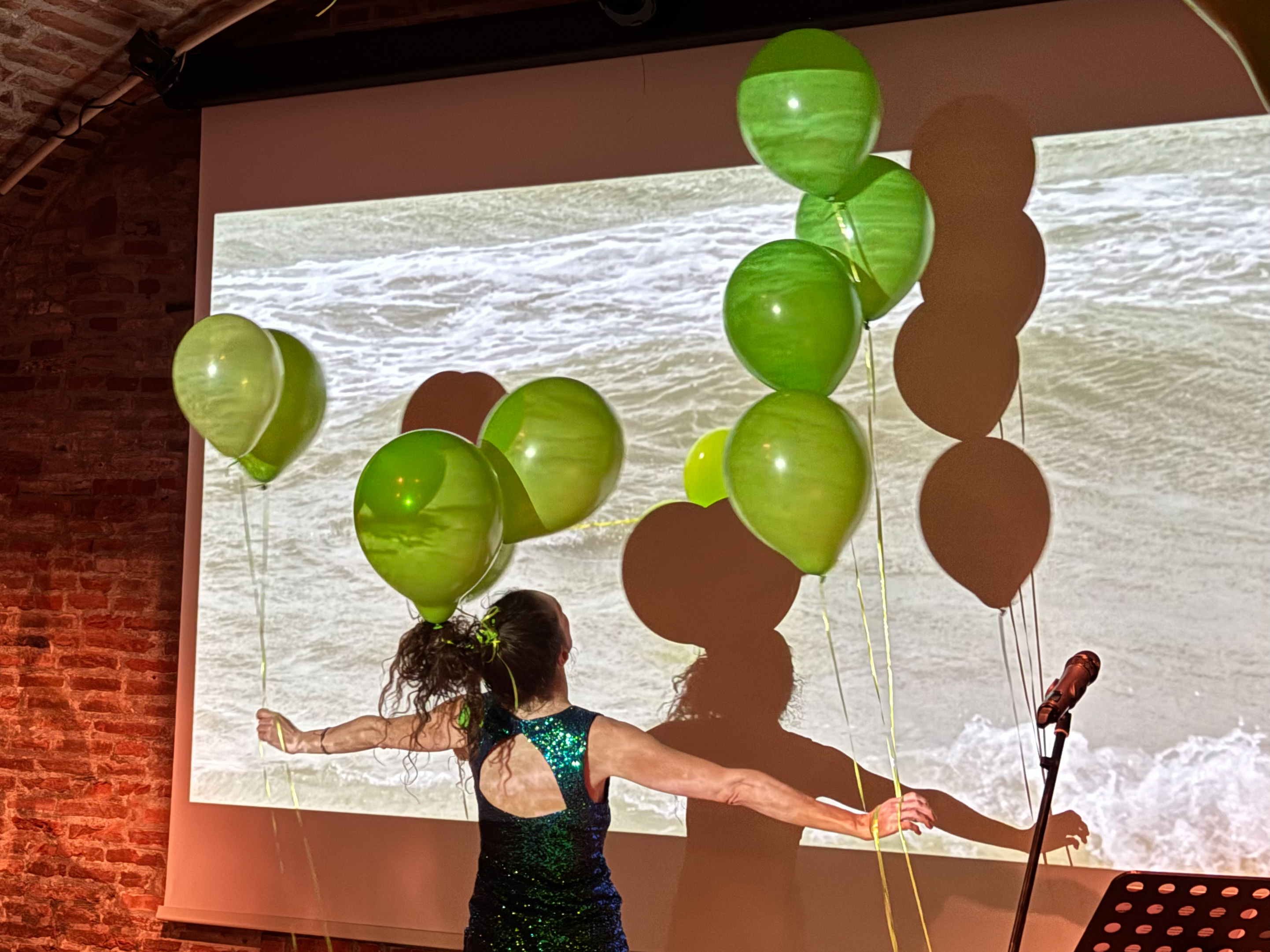
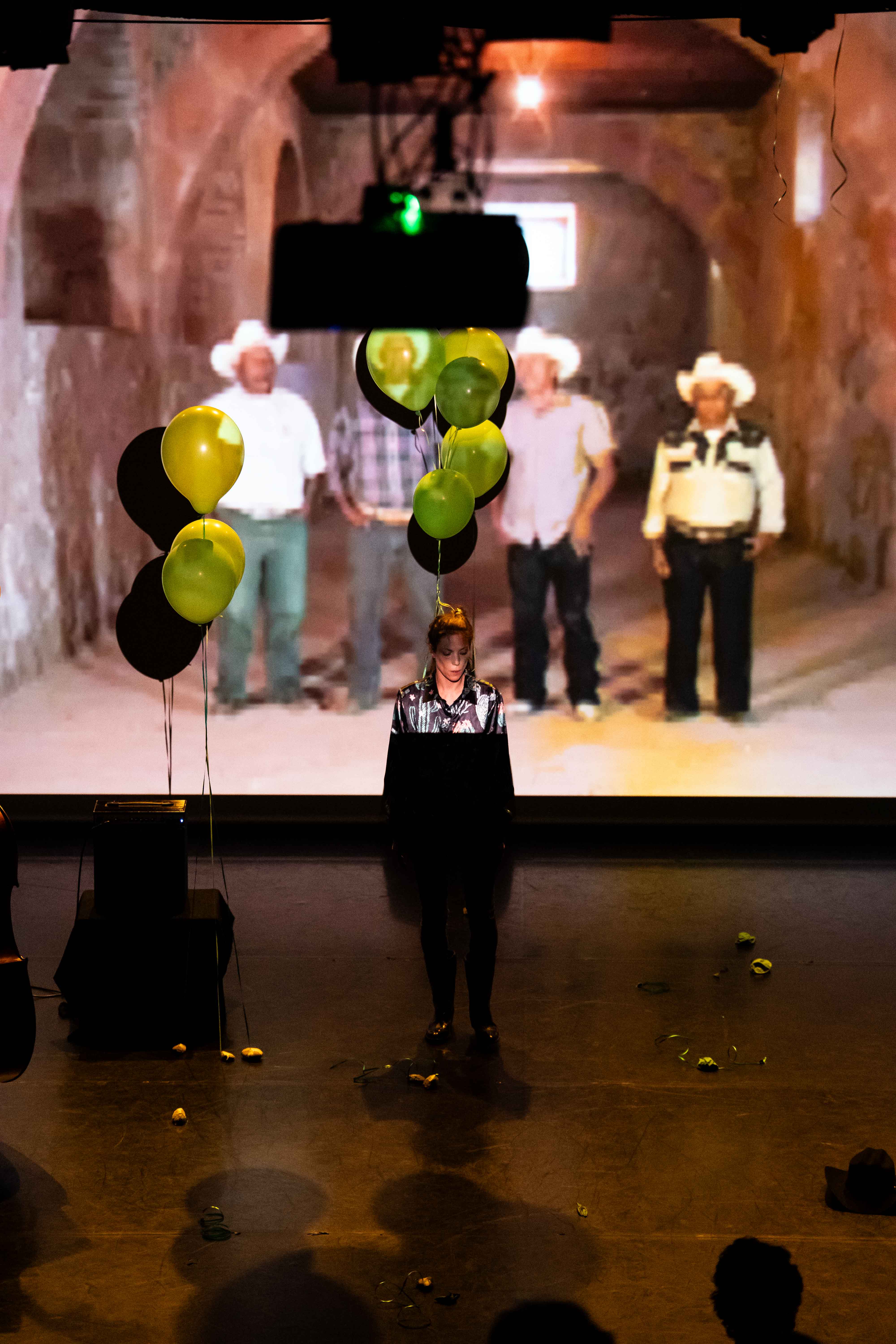
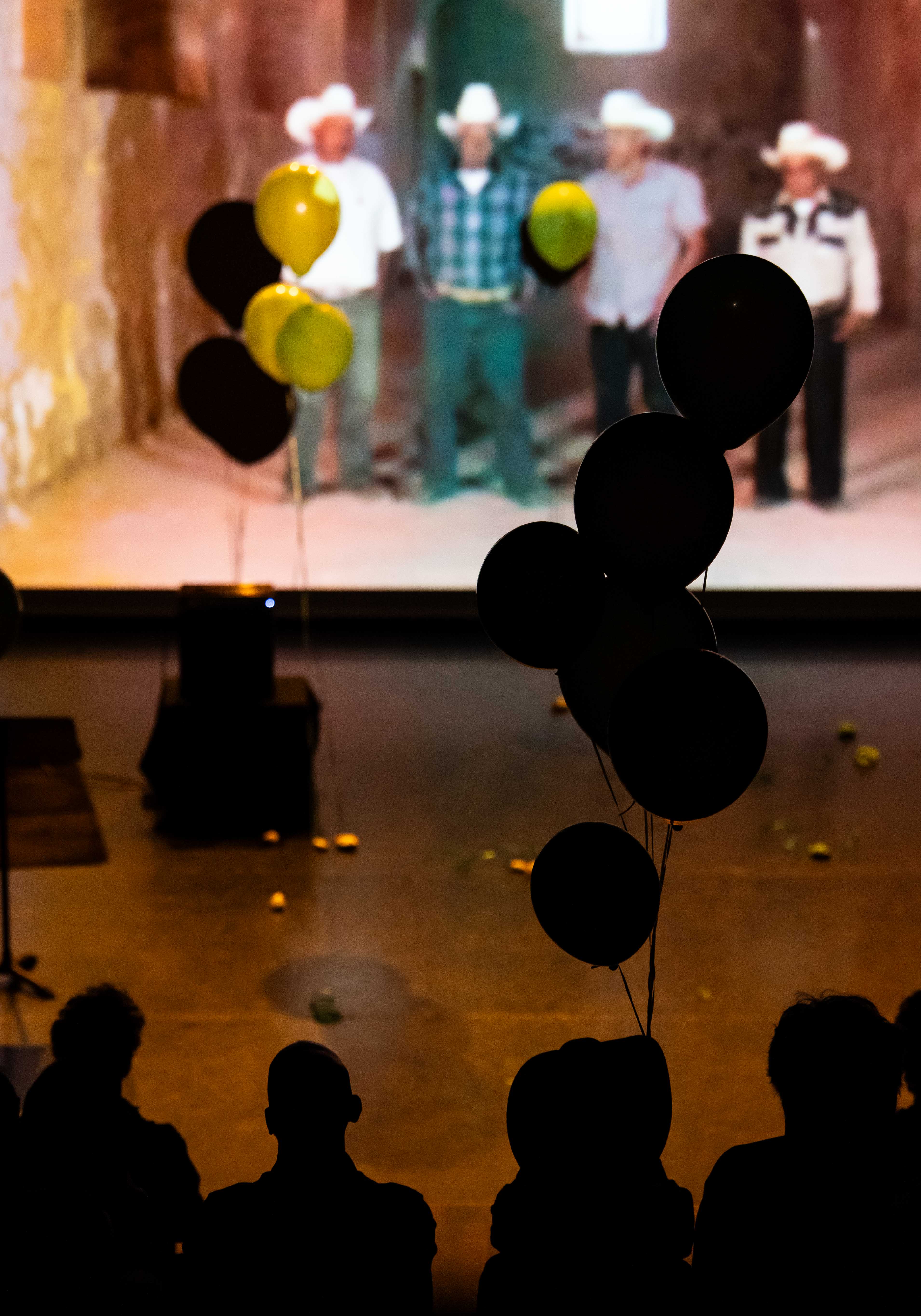
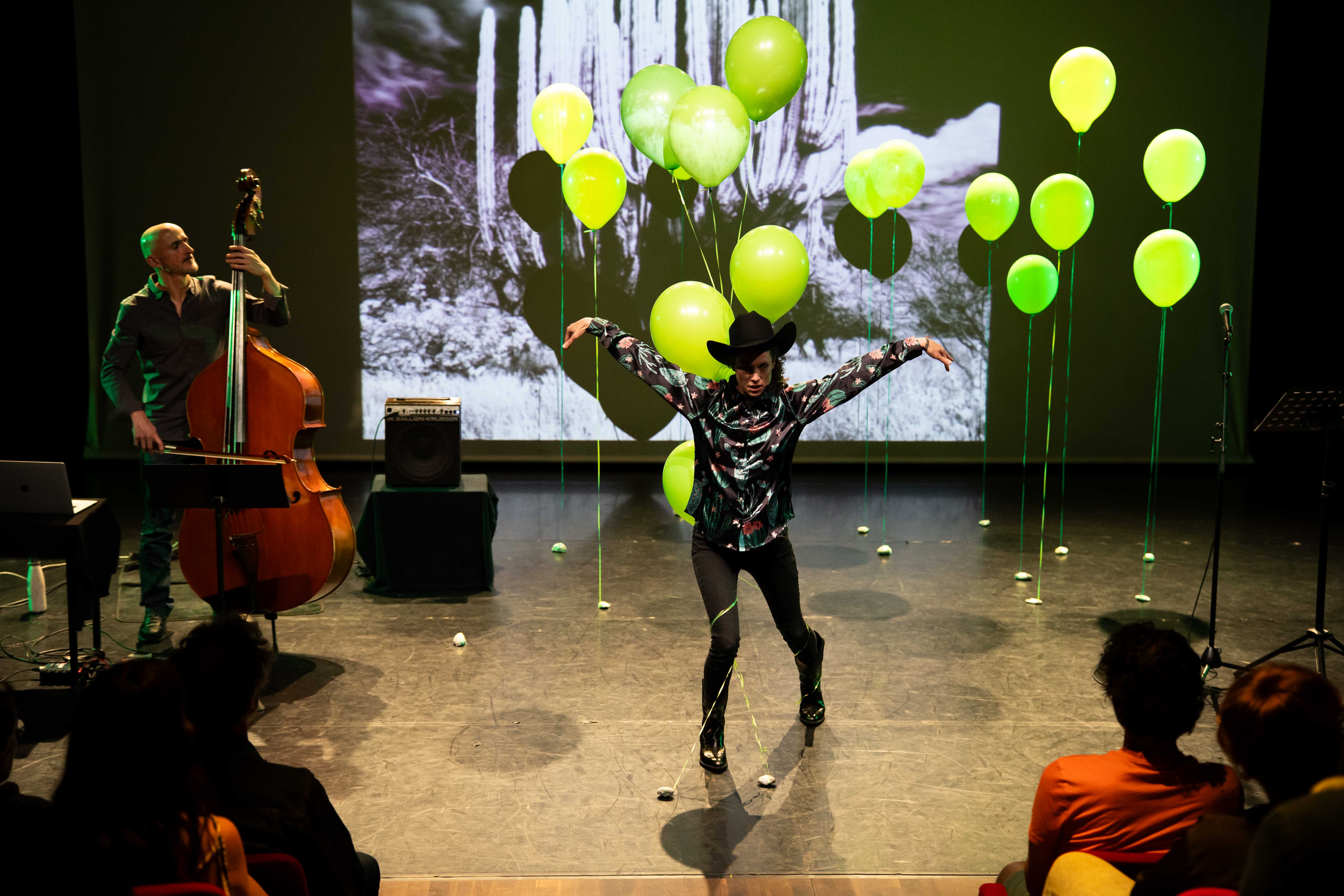
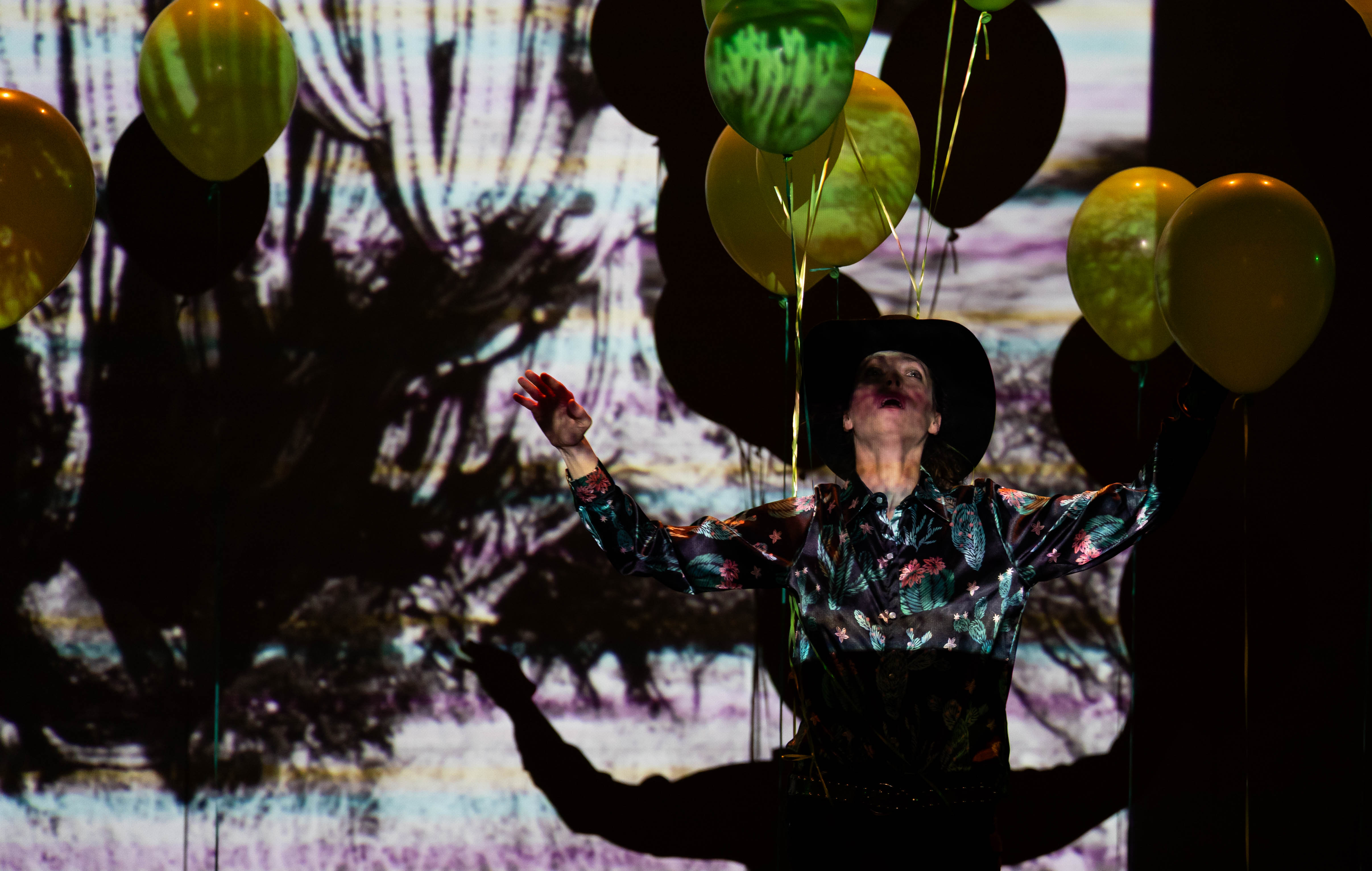
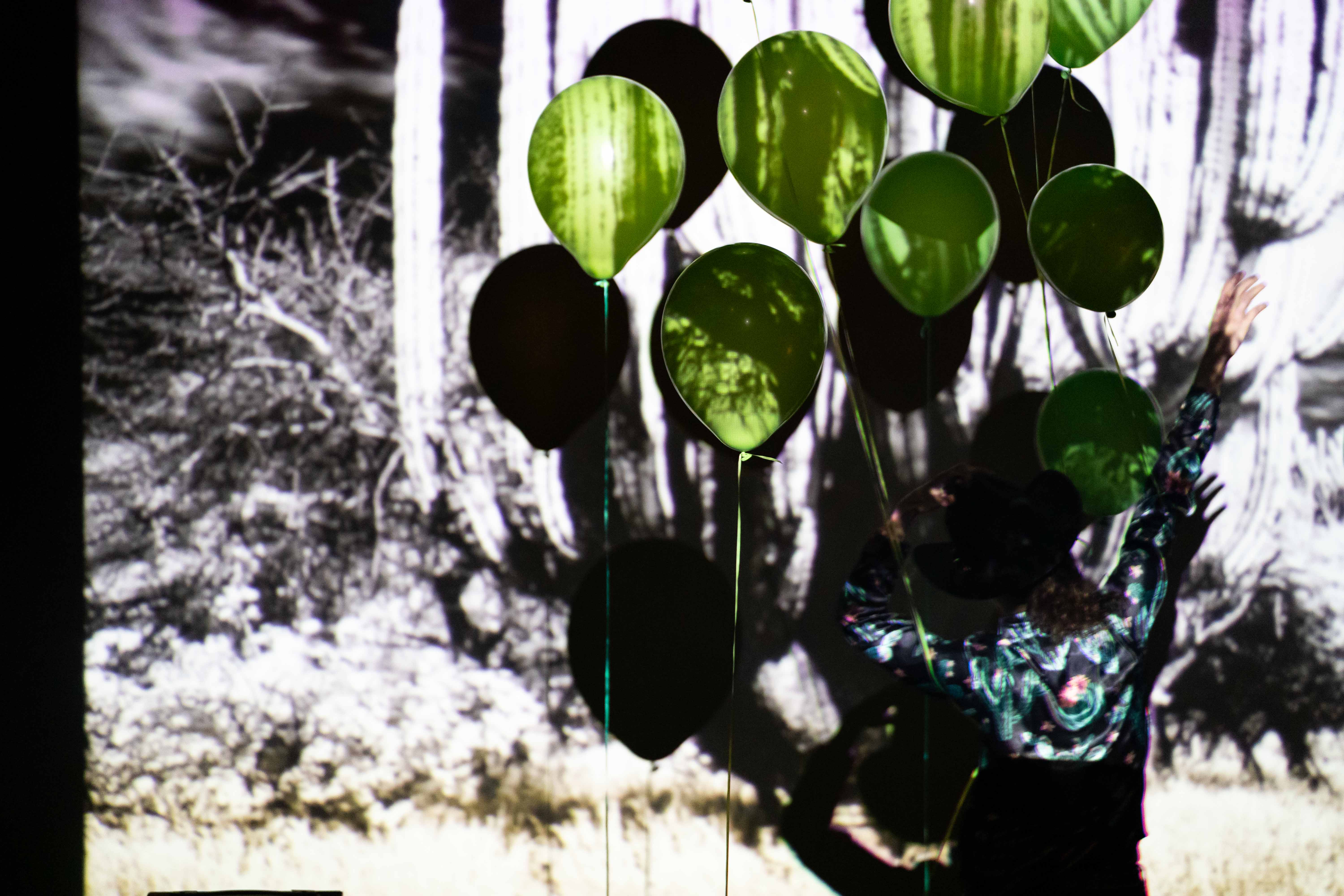
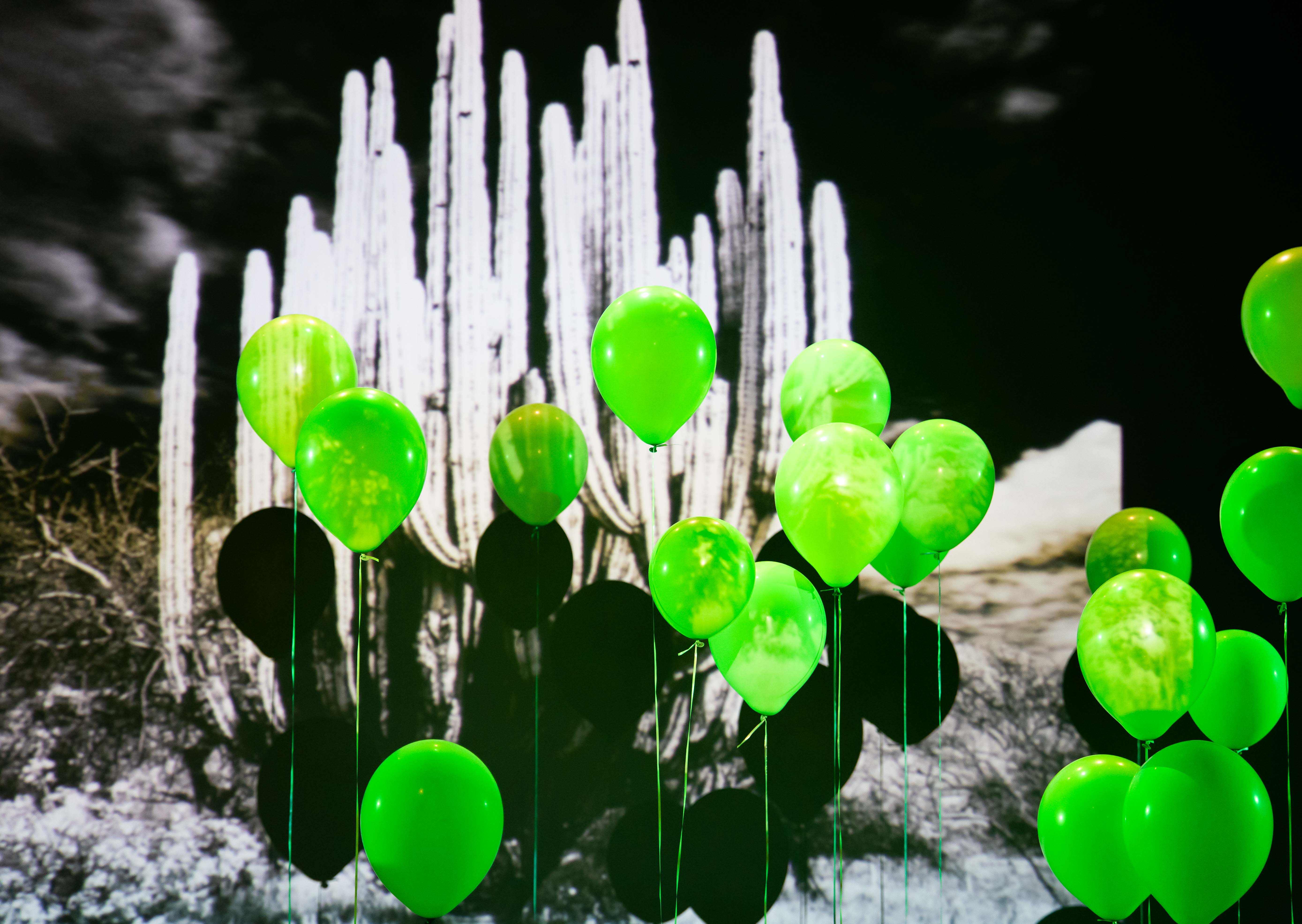
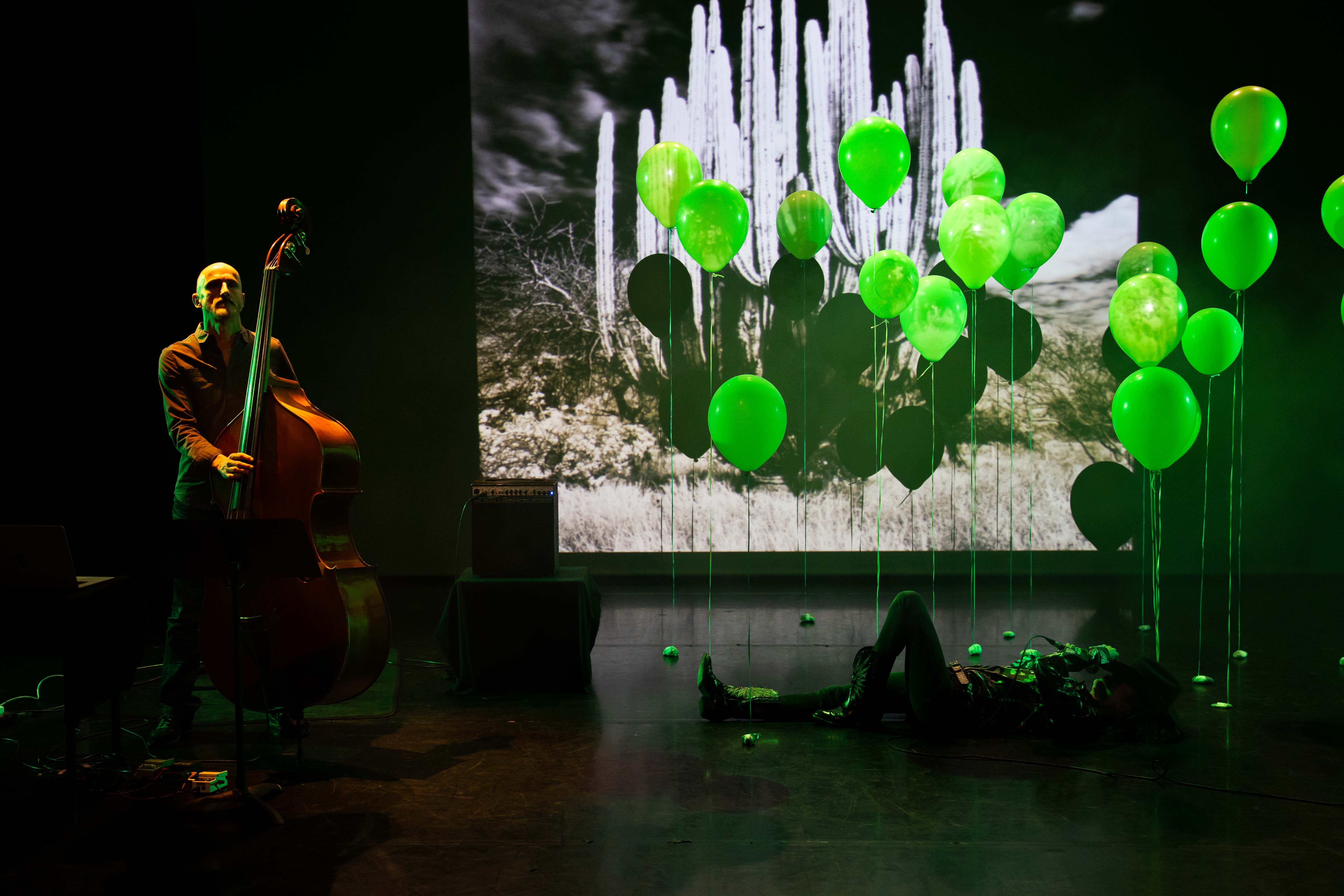
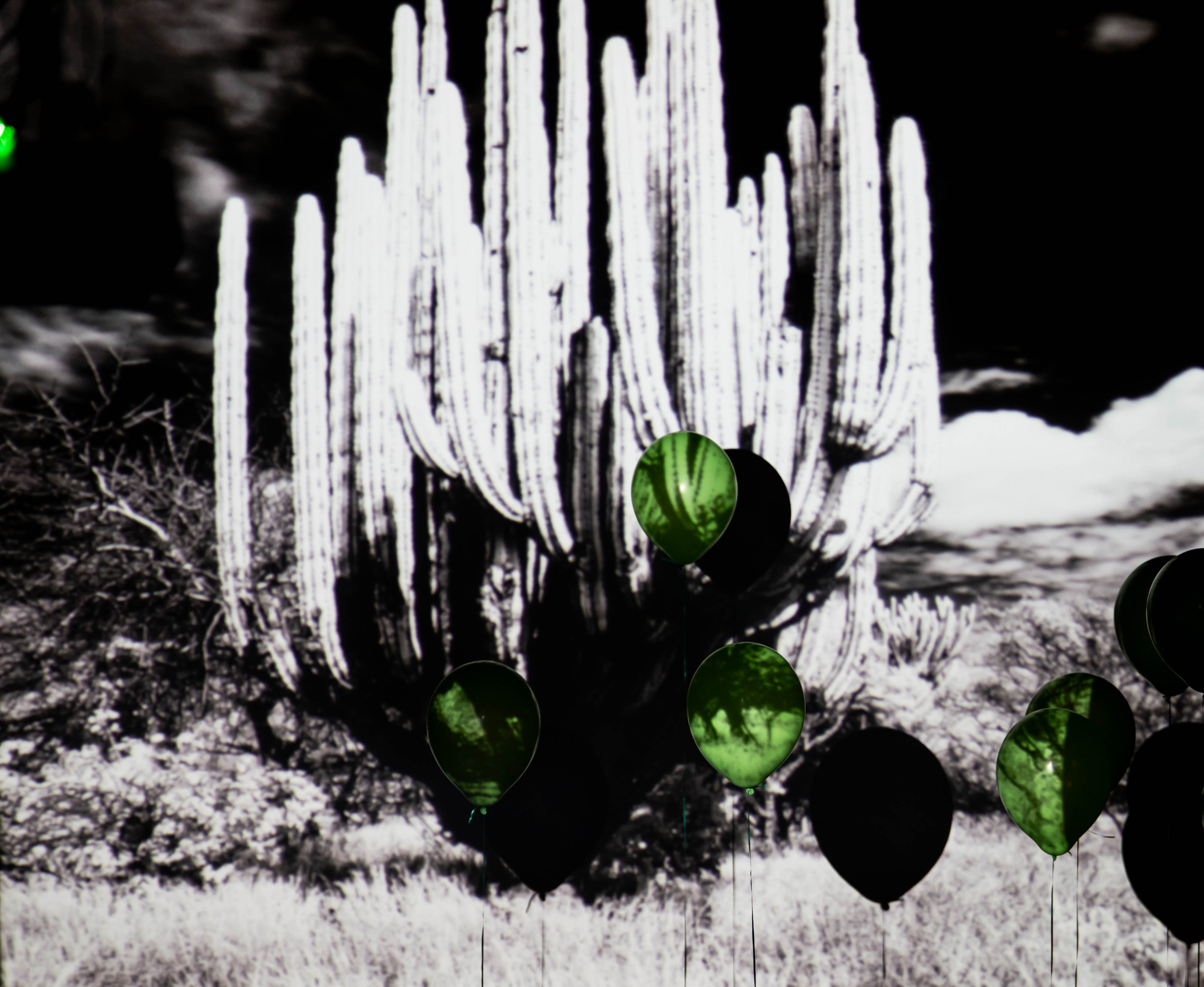
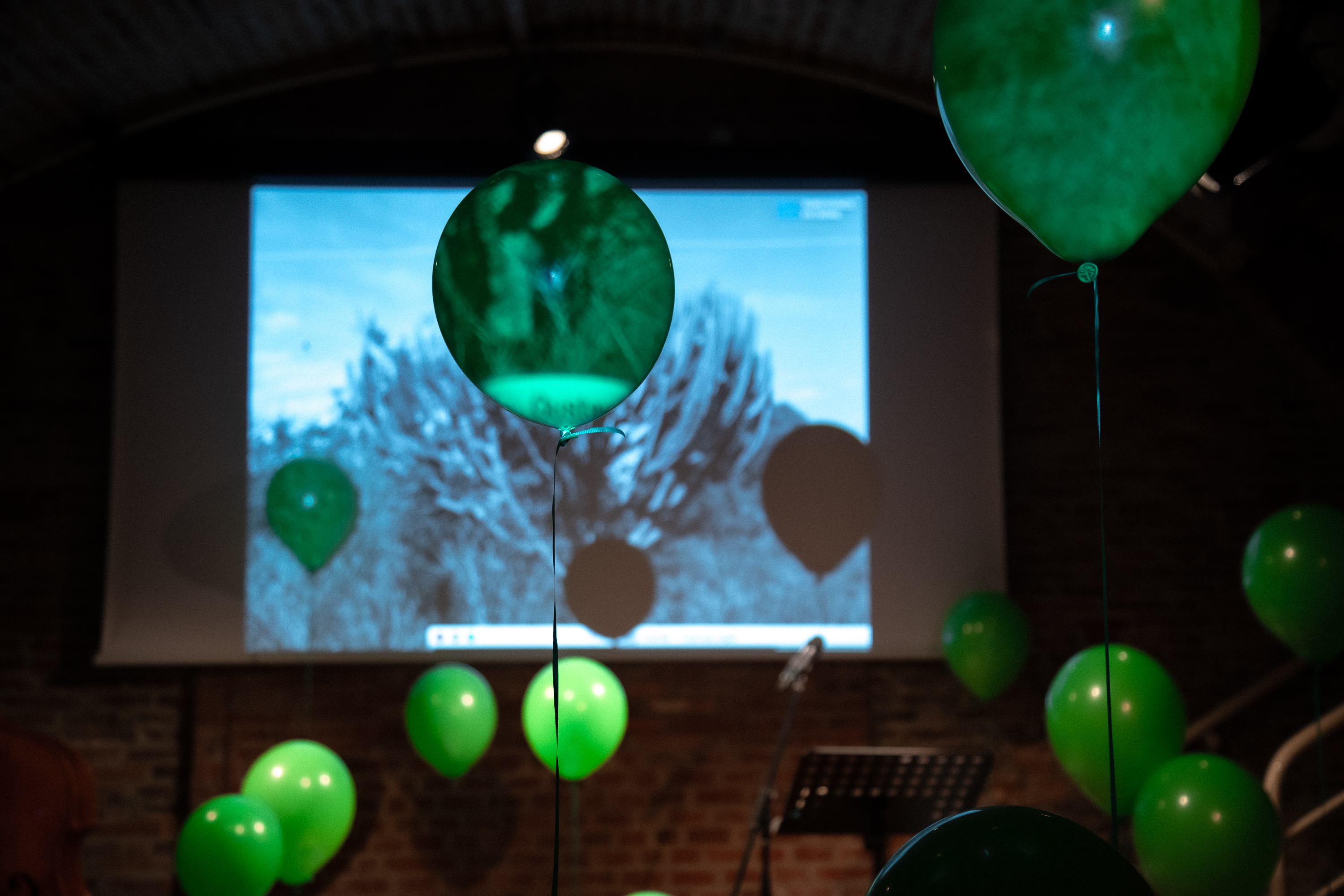
Au carrefour de la performance, du théâtre post-dramatique et de l’installation géopoétique, Survivance Extrême interroge la porosité radicale entre les corps et les territoires meurtris de l’Anthropocène. L’œuvre matérialise l’aboutissement d’une investigation au long cours menée entre l’Europe et l’Amérique latine — notamment à travers le road-trip de recherche Cactus, mené au Mexique avec le photographe Antonio Juárez Caudillo, dont les archives visuelles sont projetées en direct comme la mémoire vive du paysage.
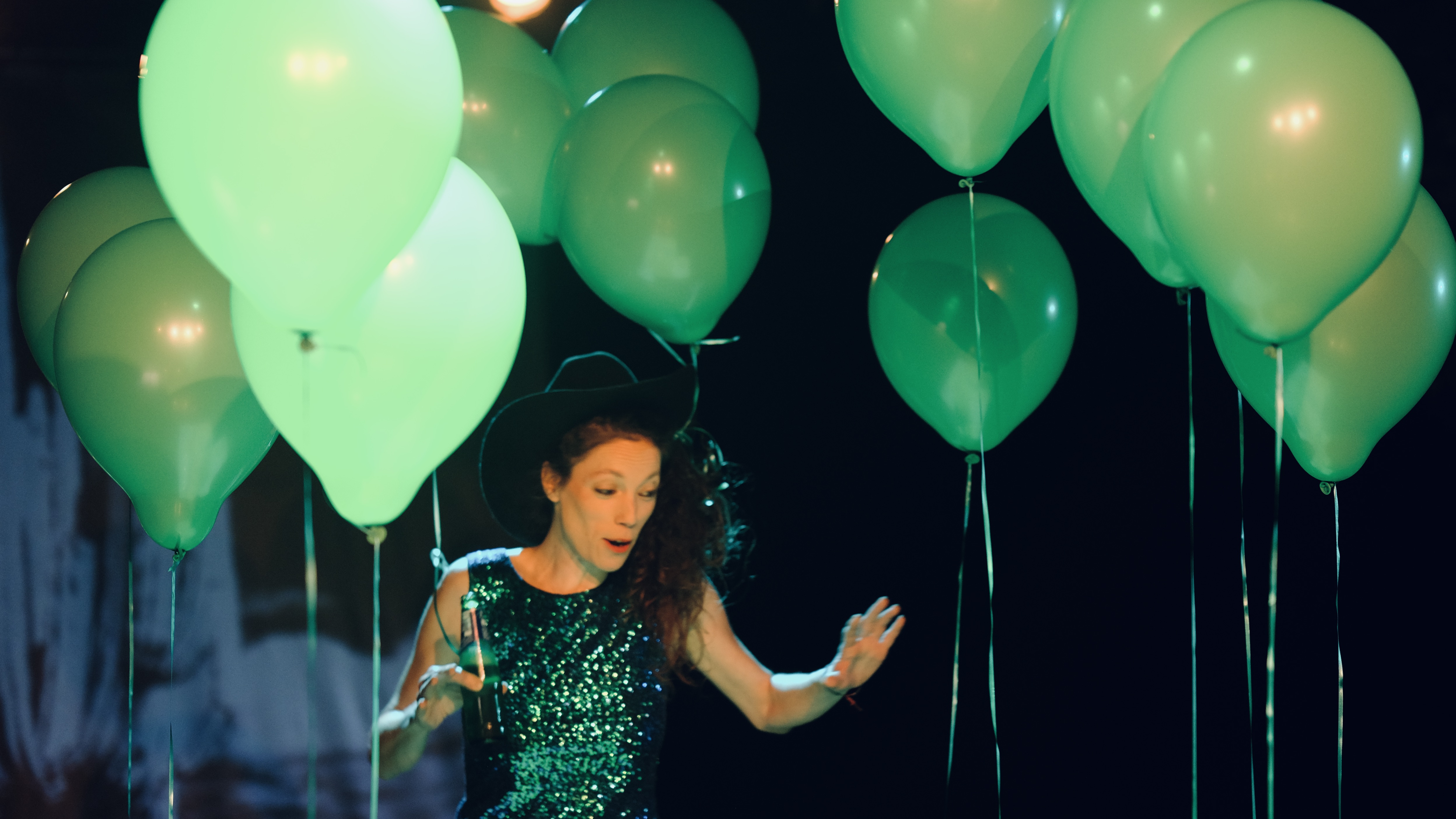
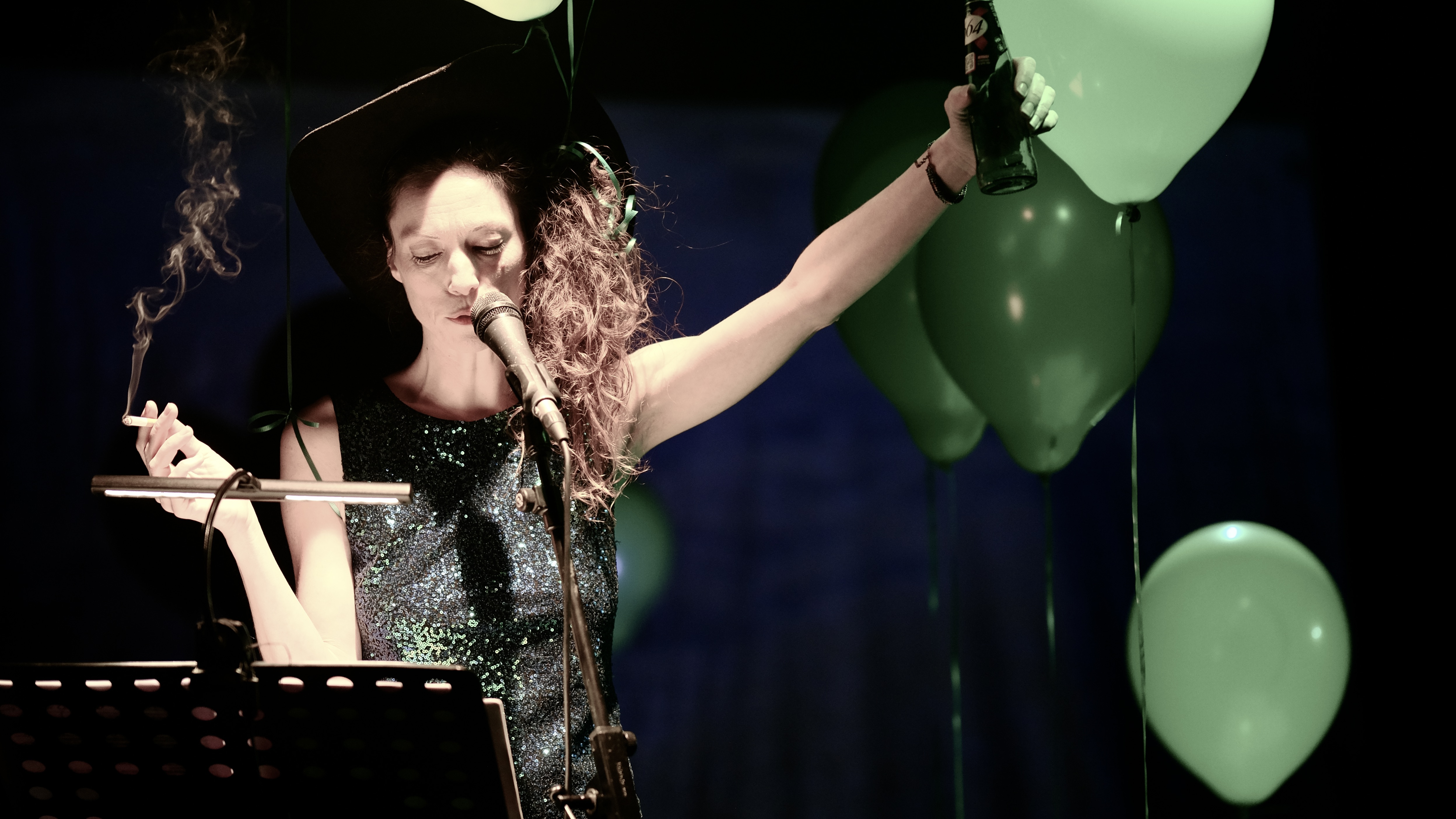
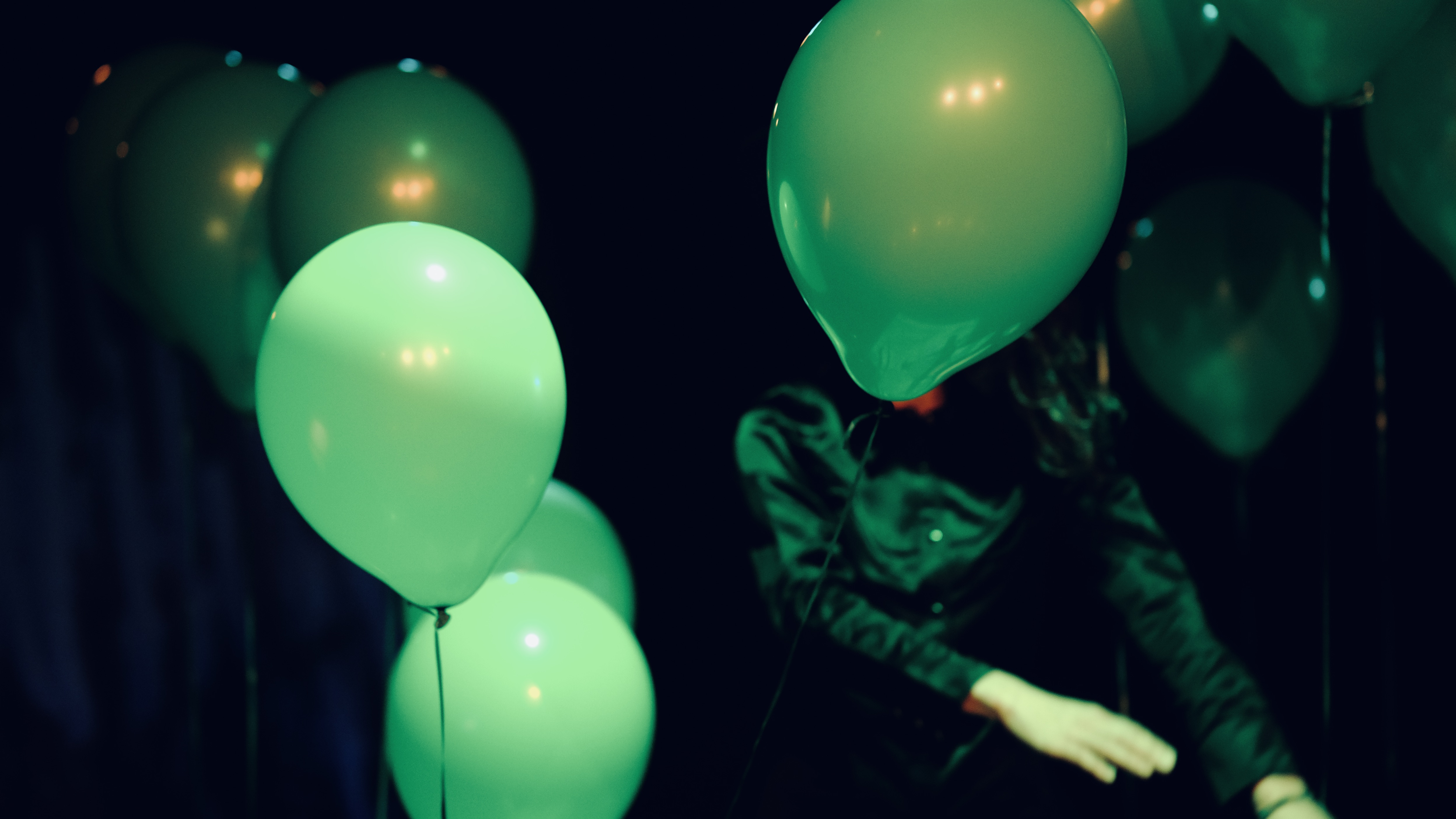
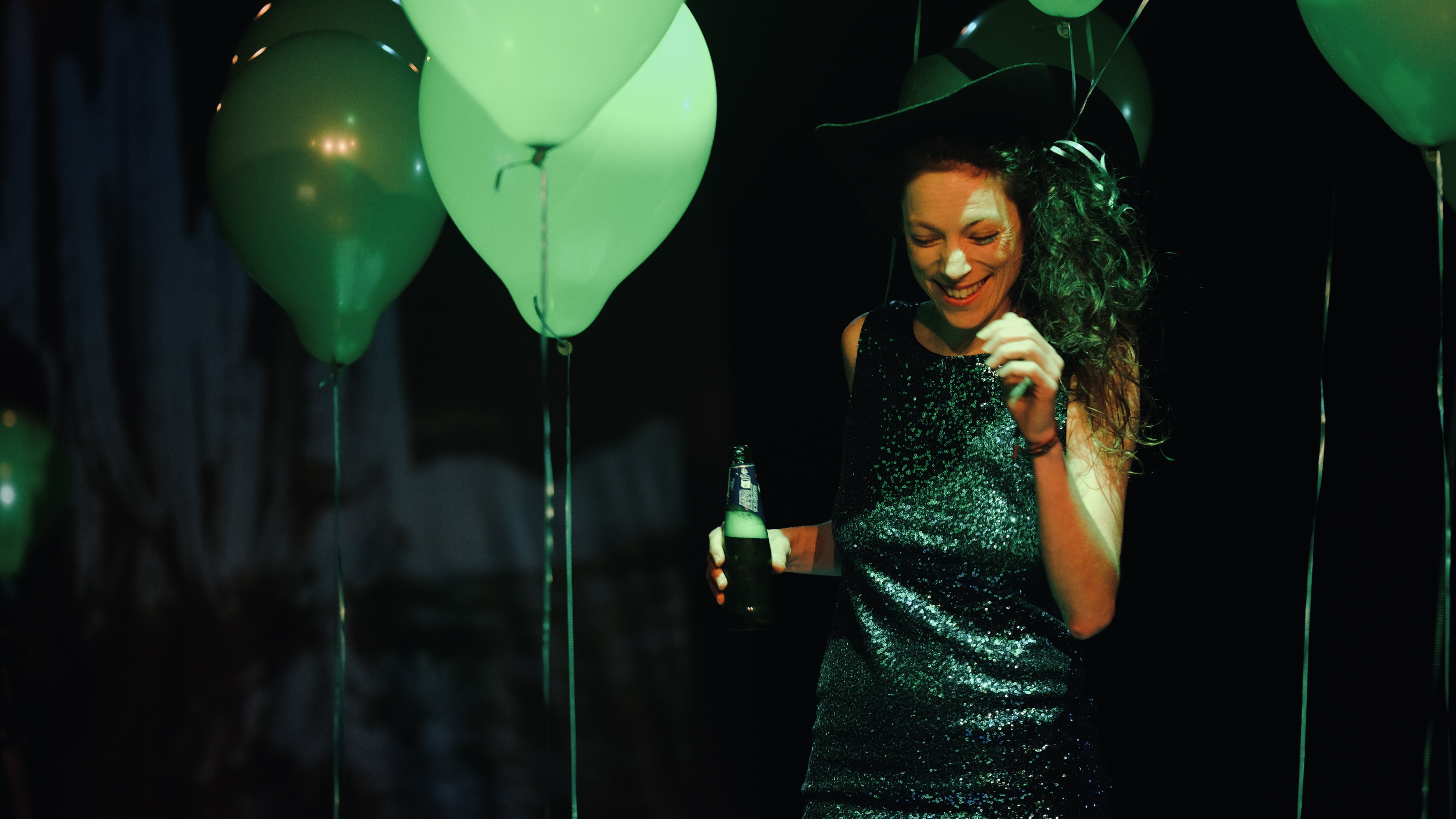
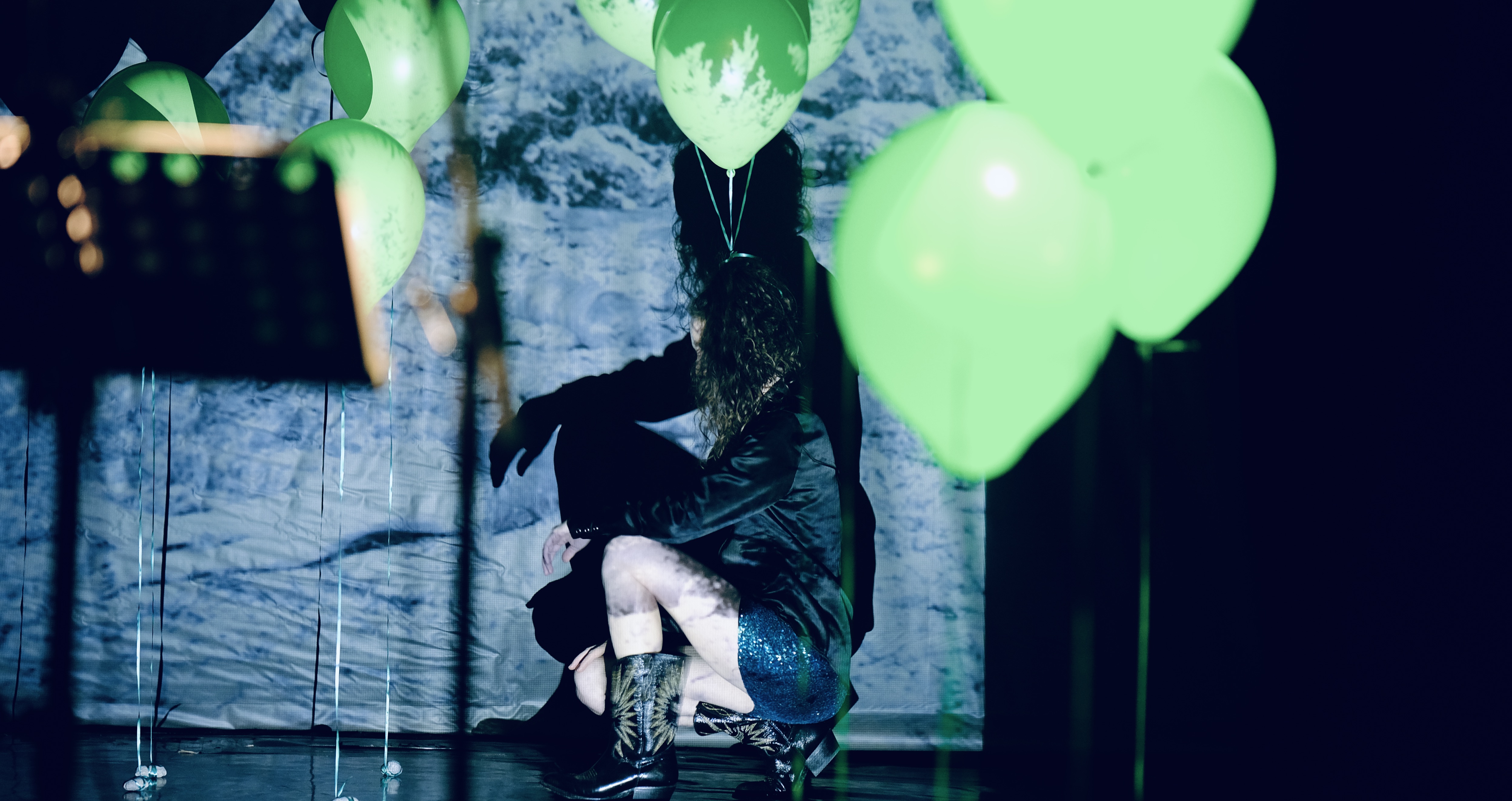
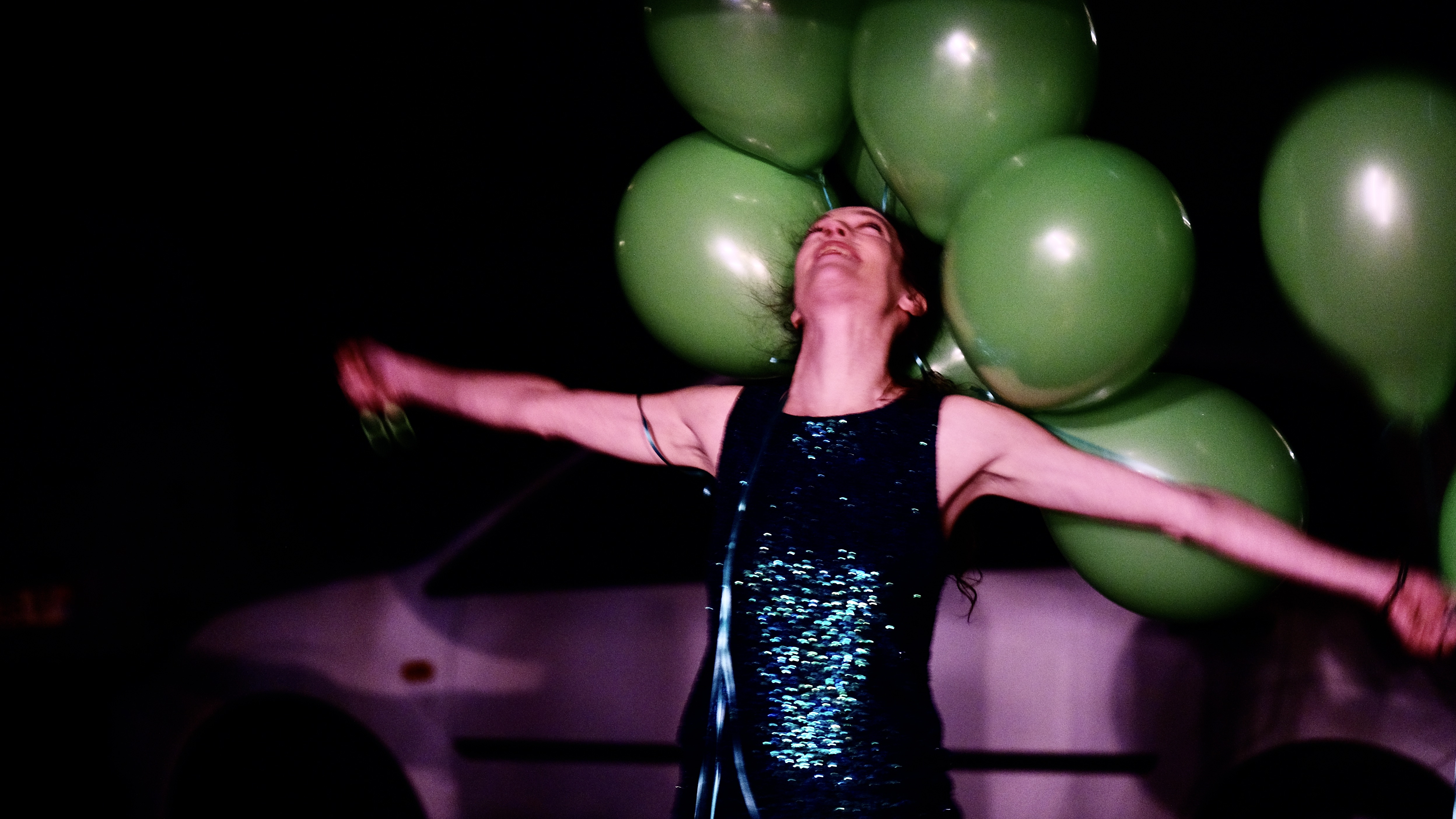
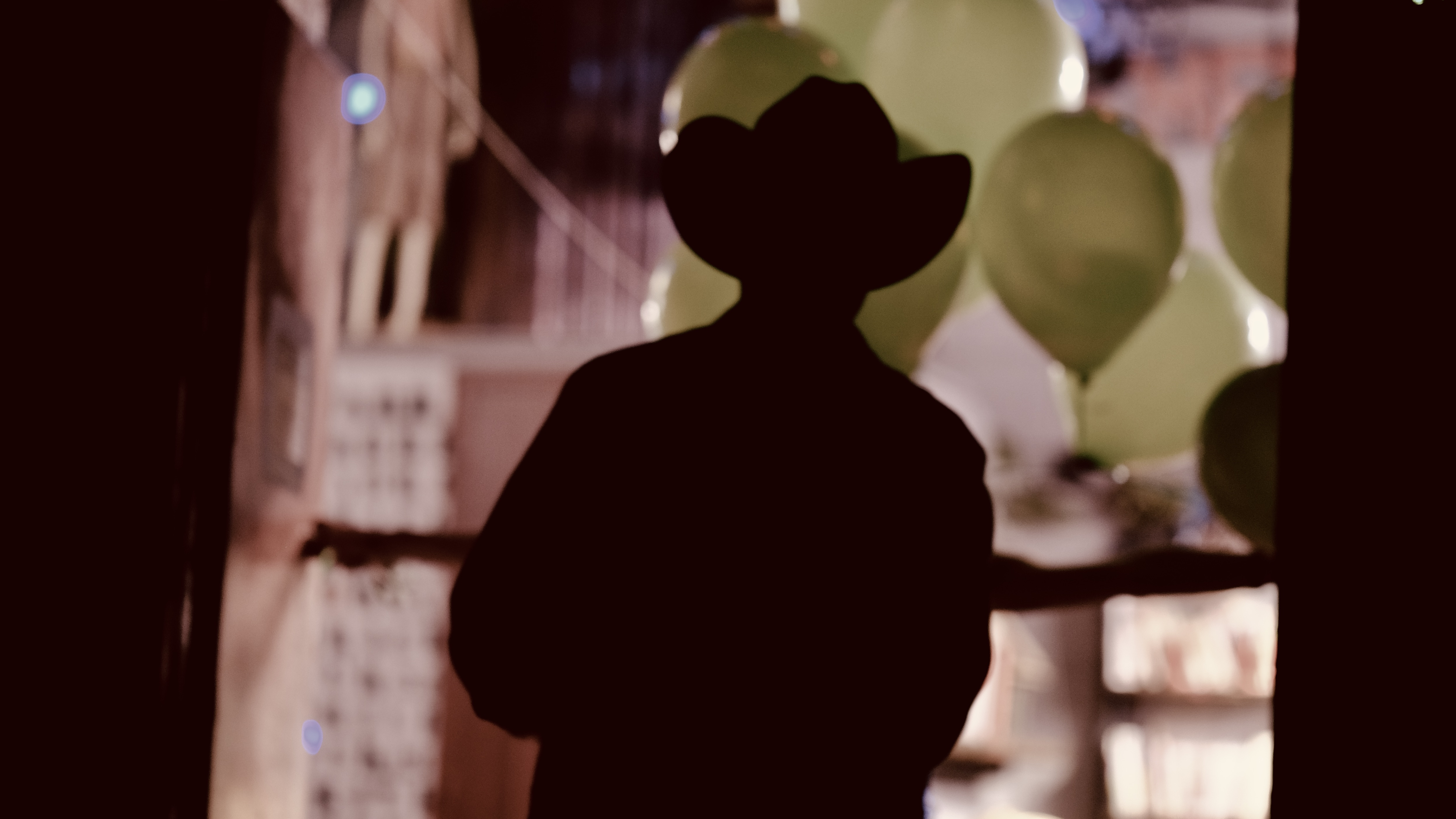
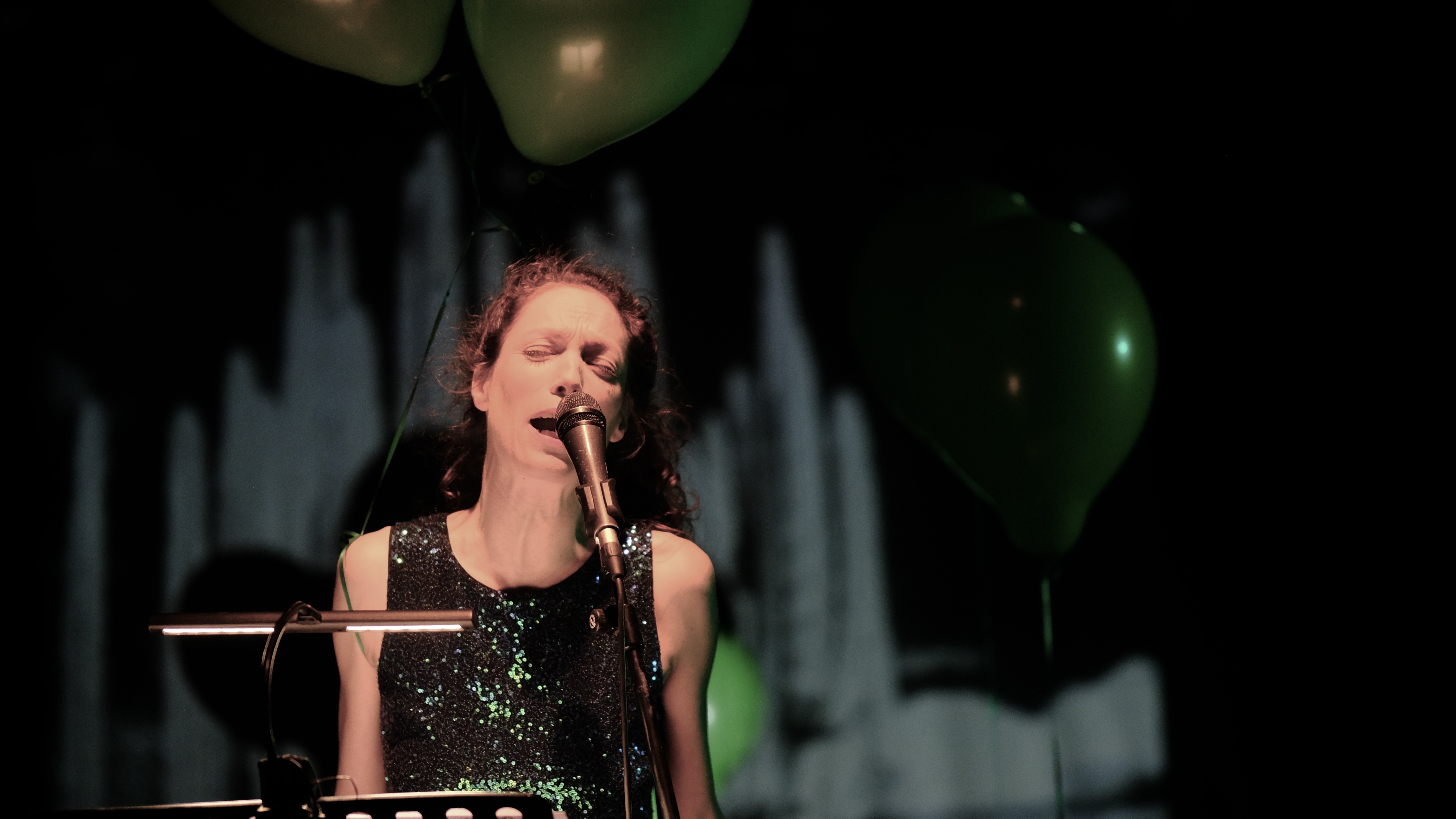
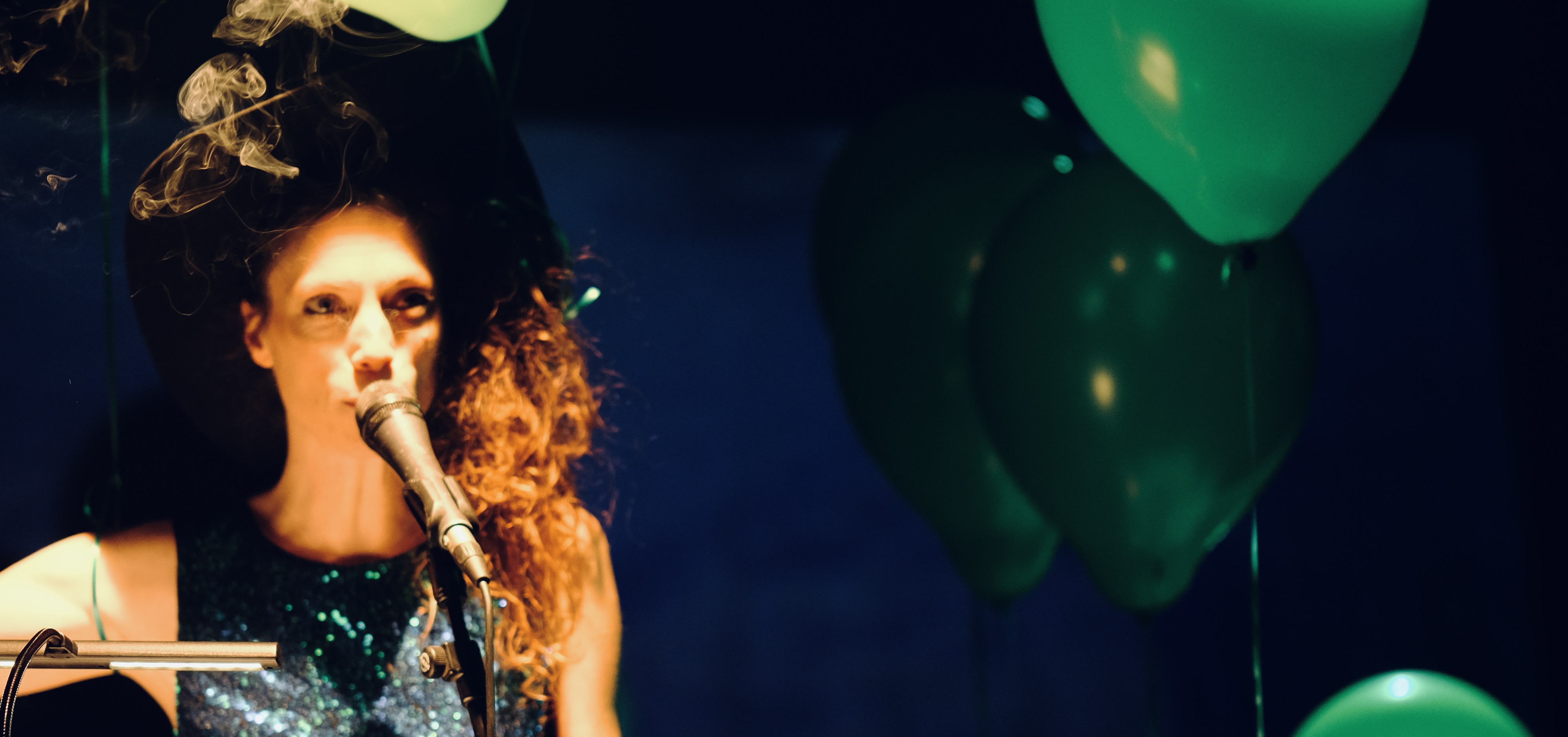
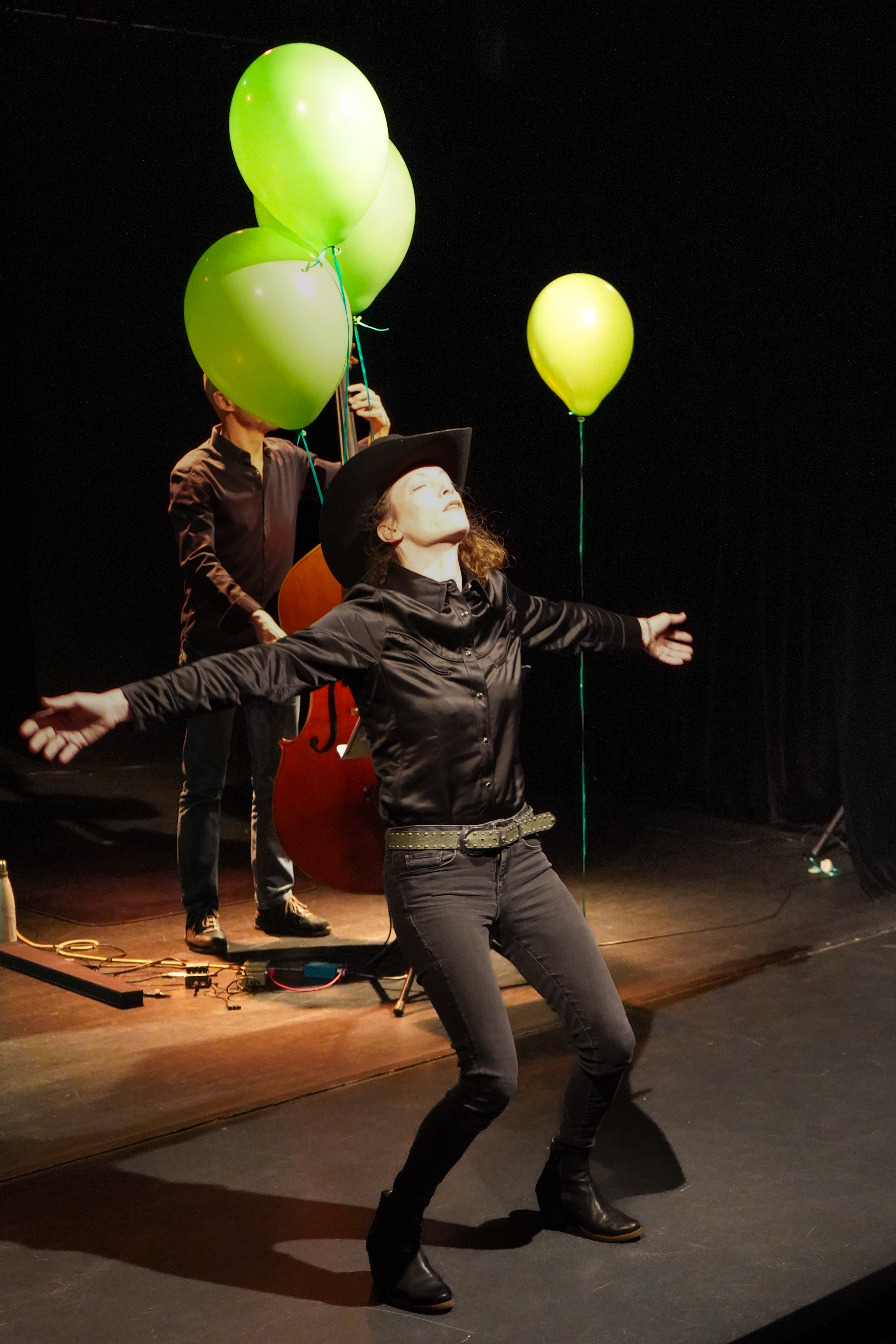
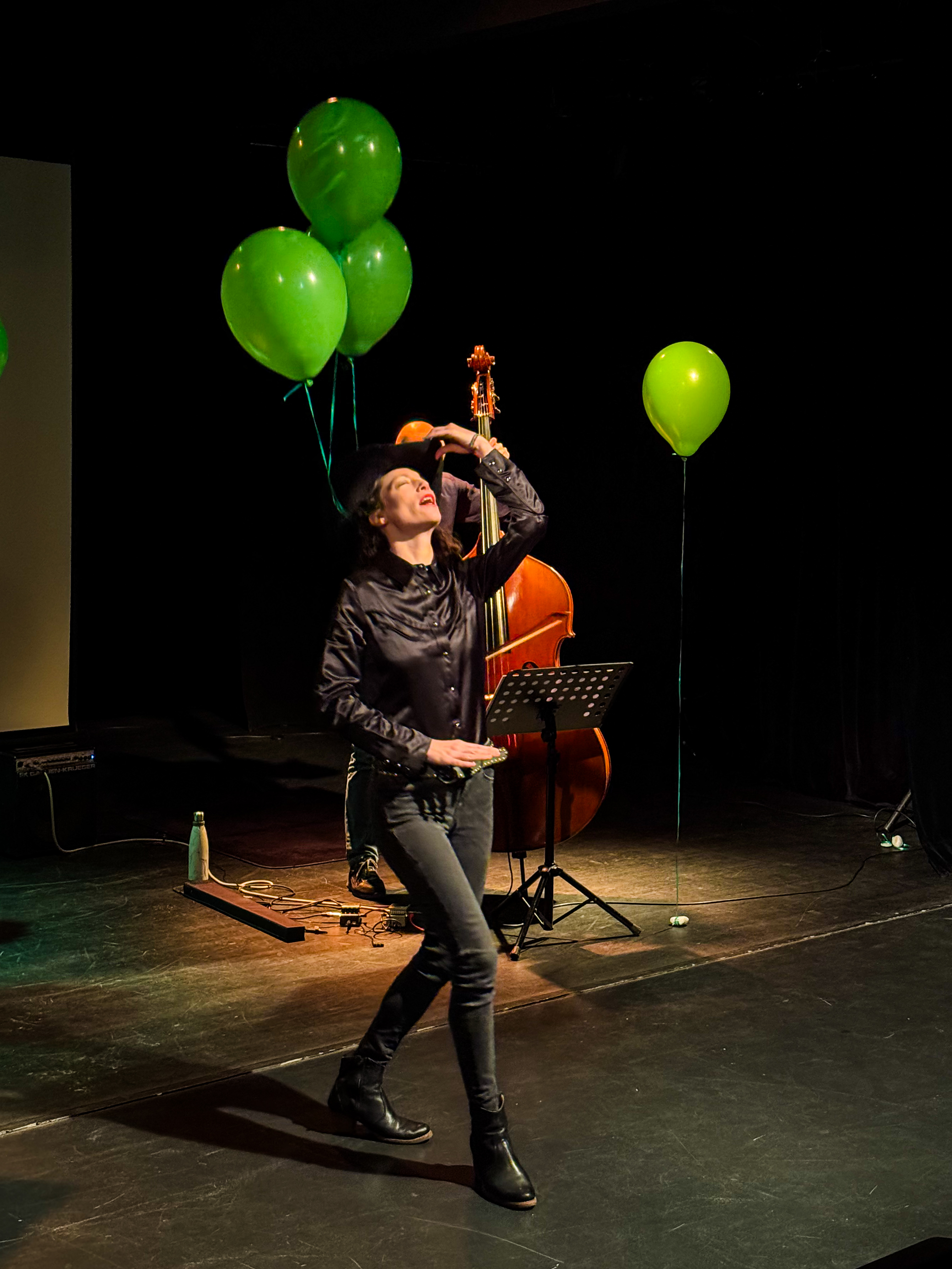
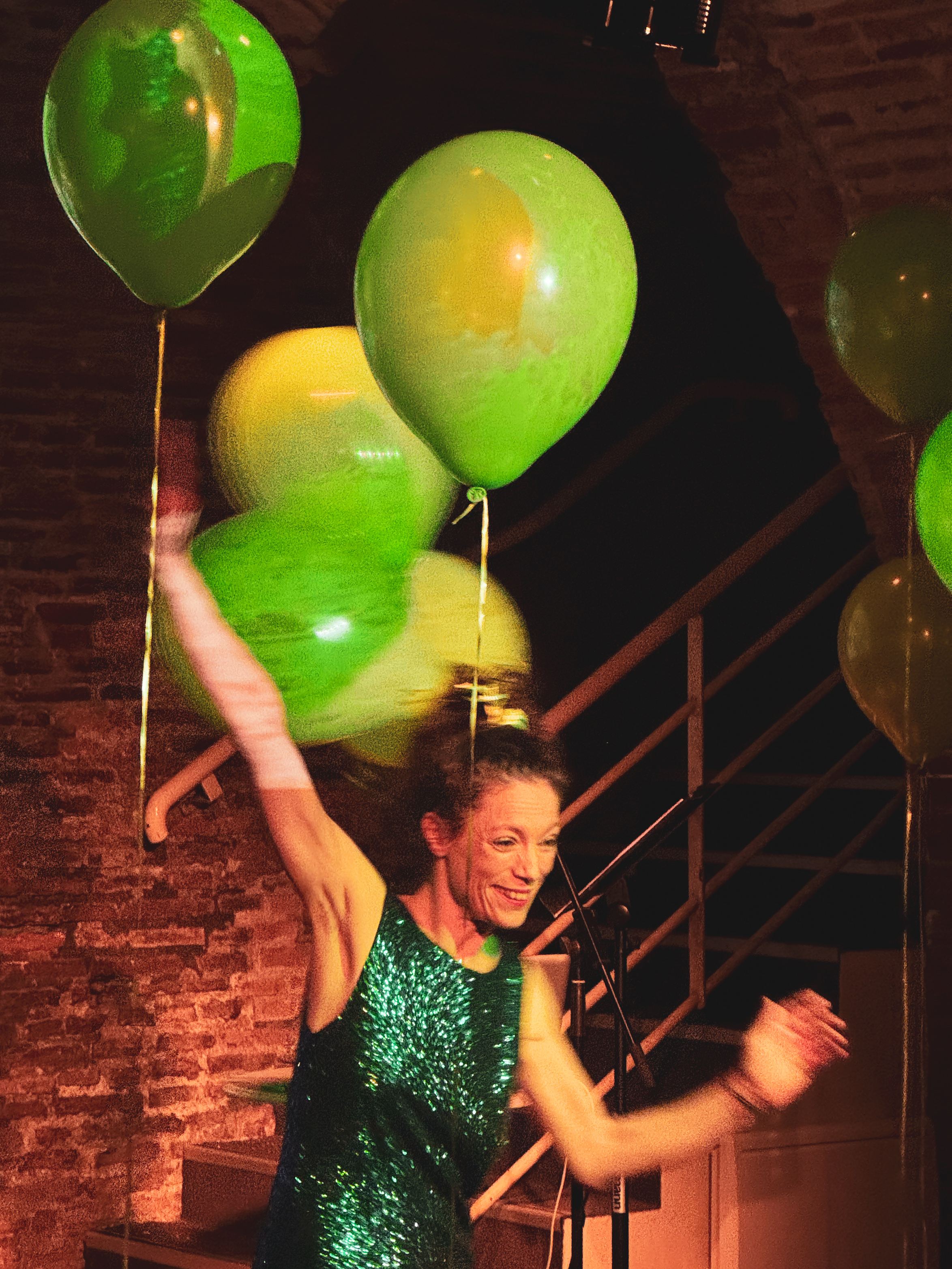
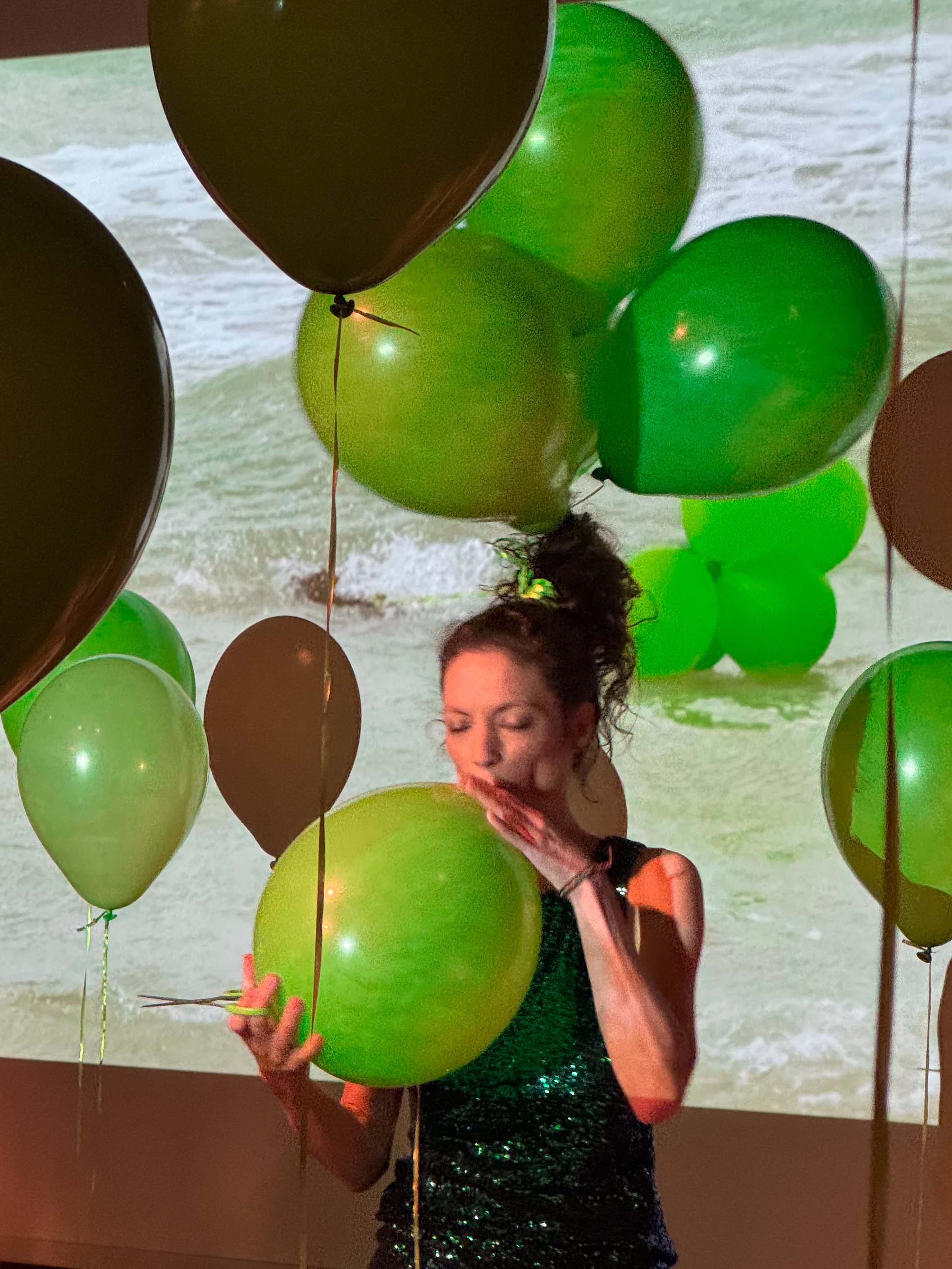
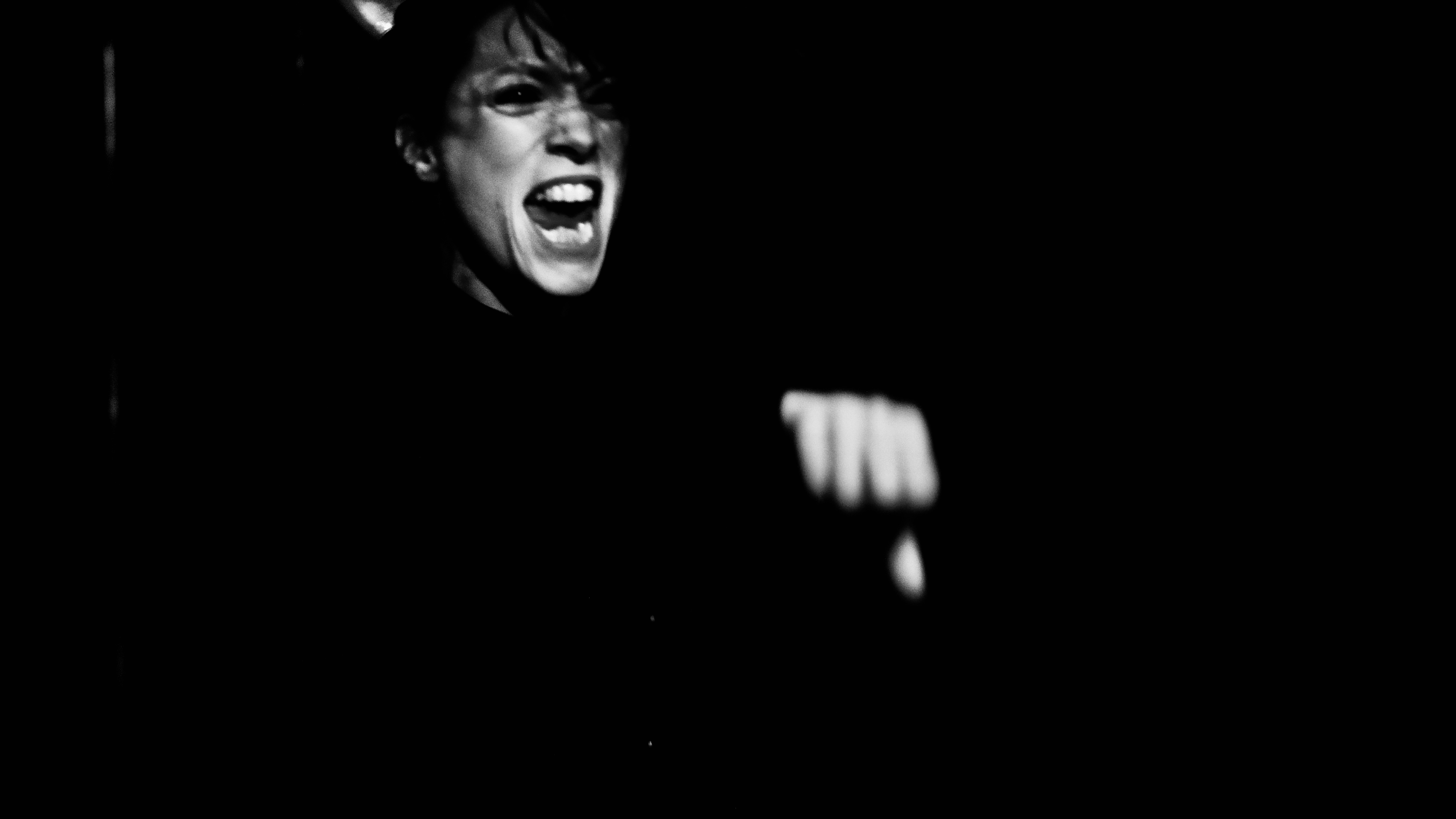
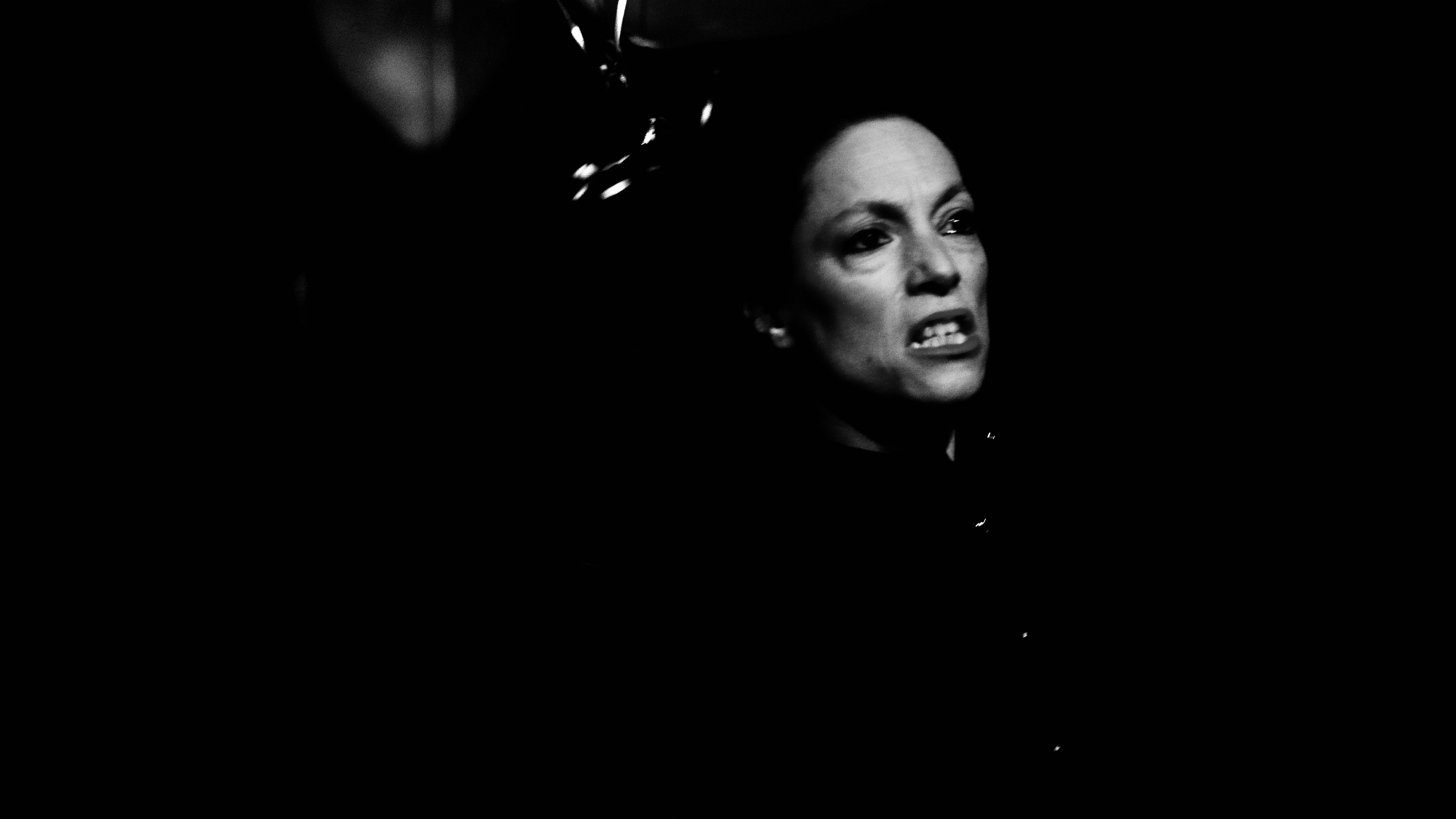
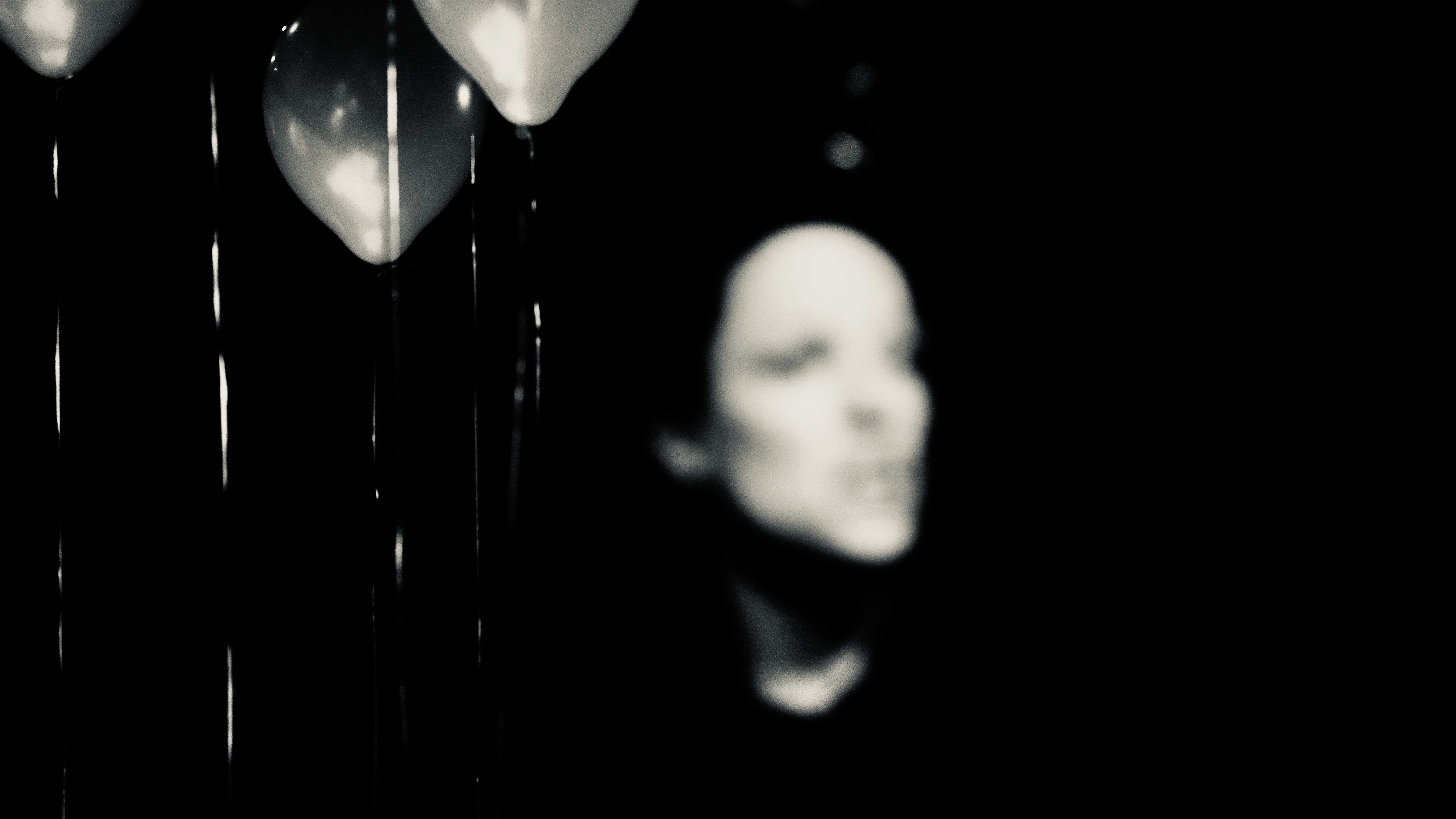
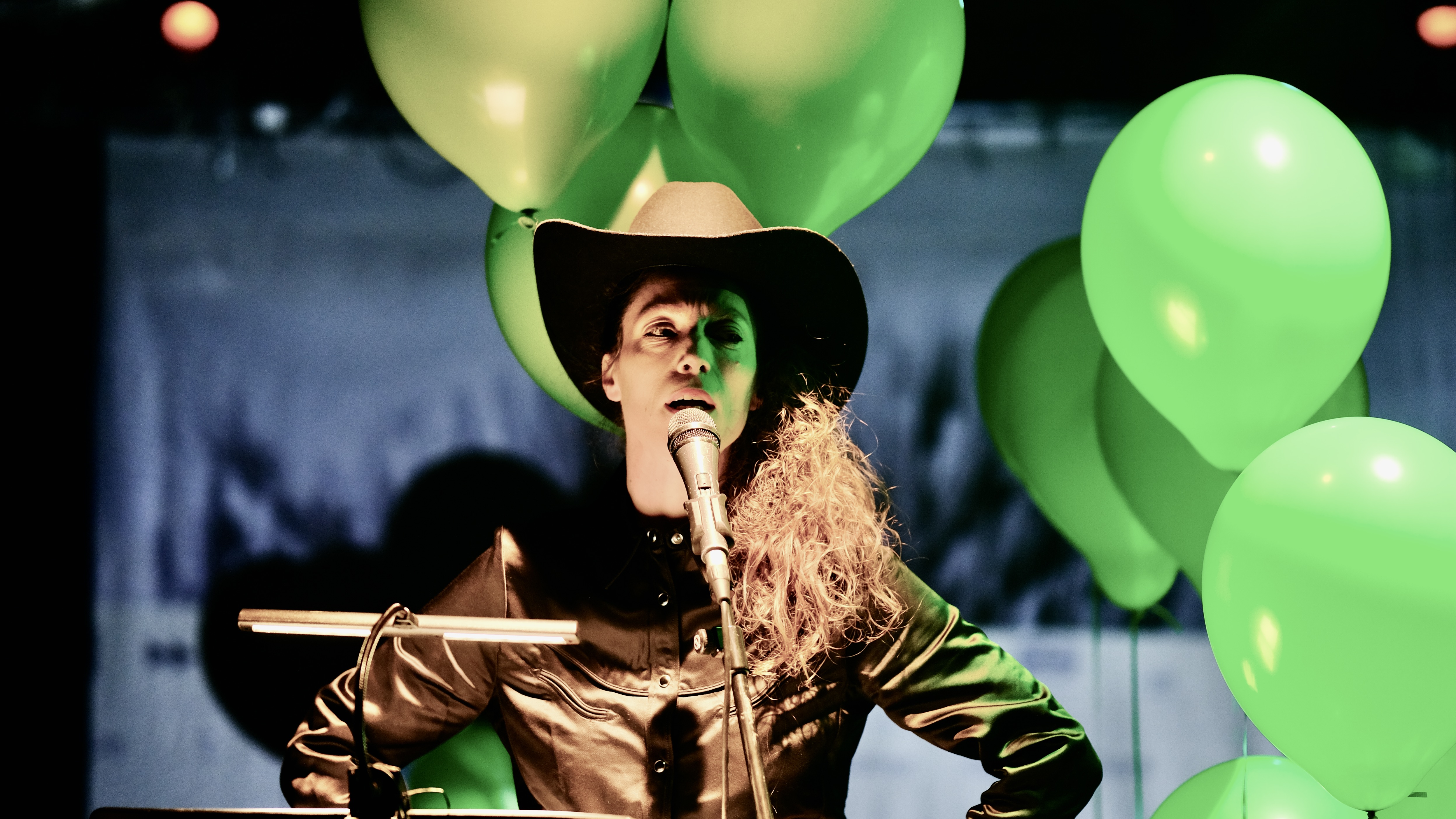
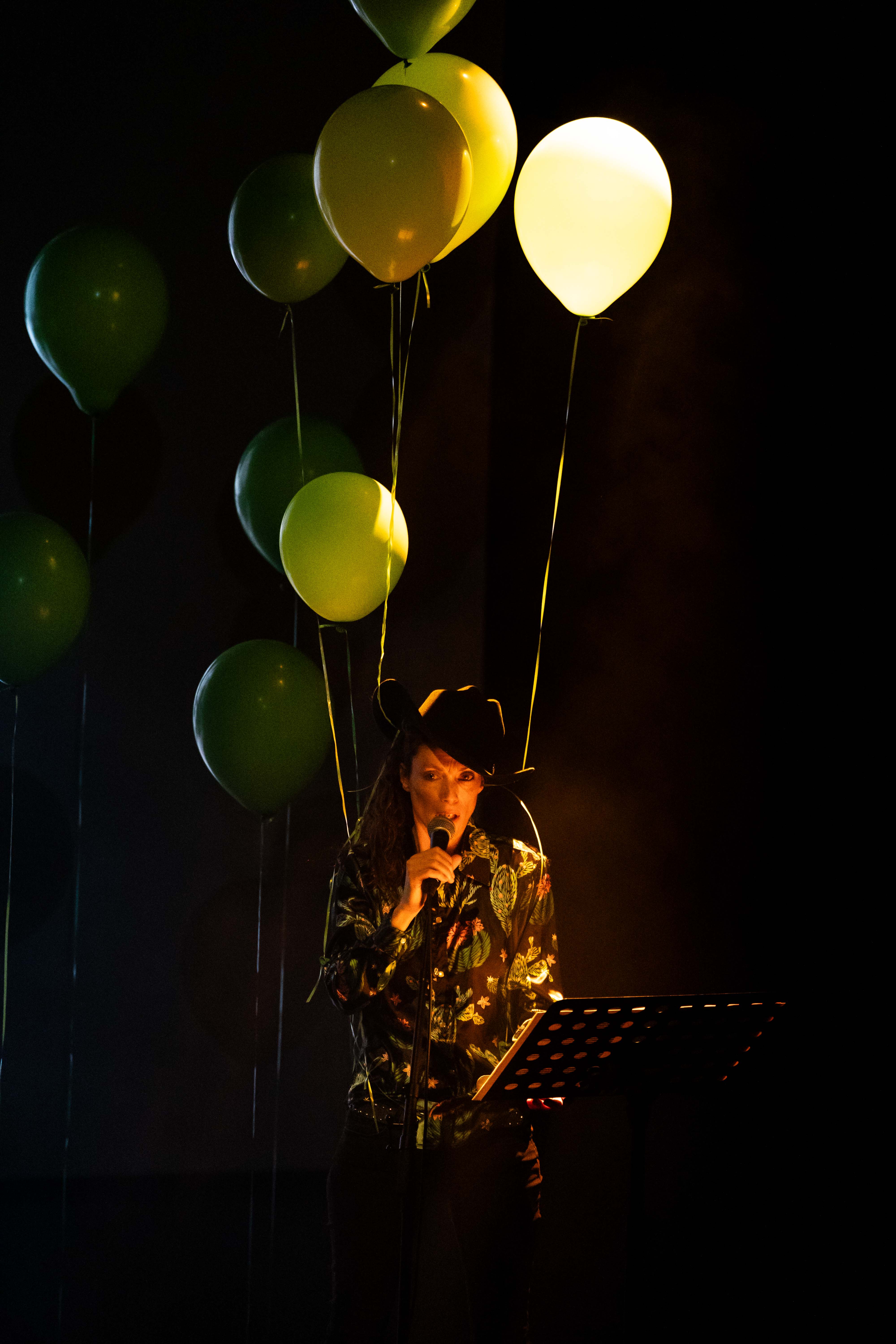
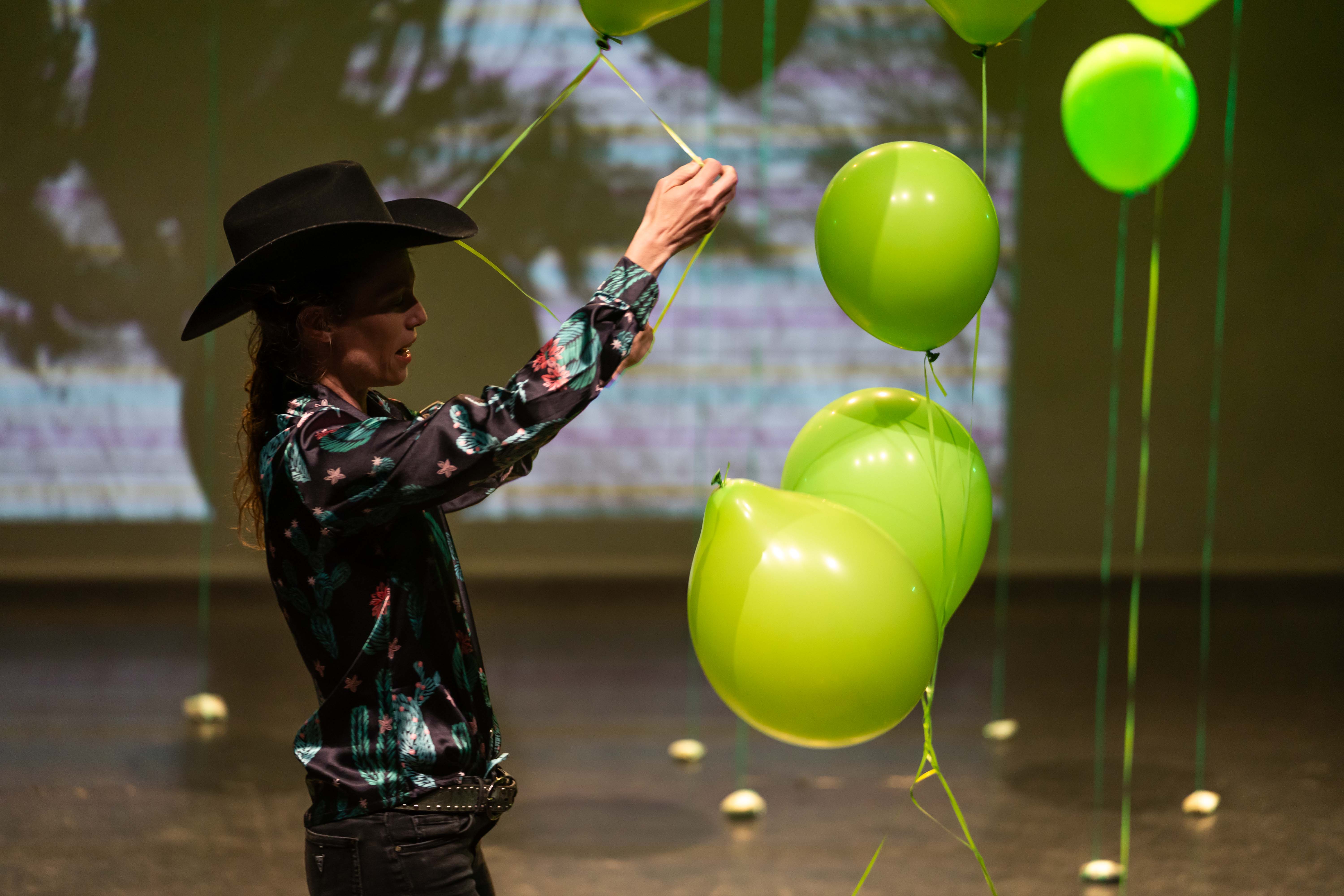
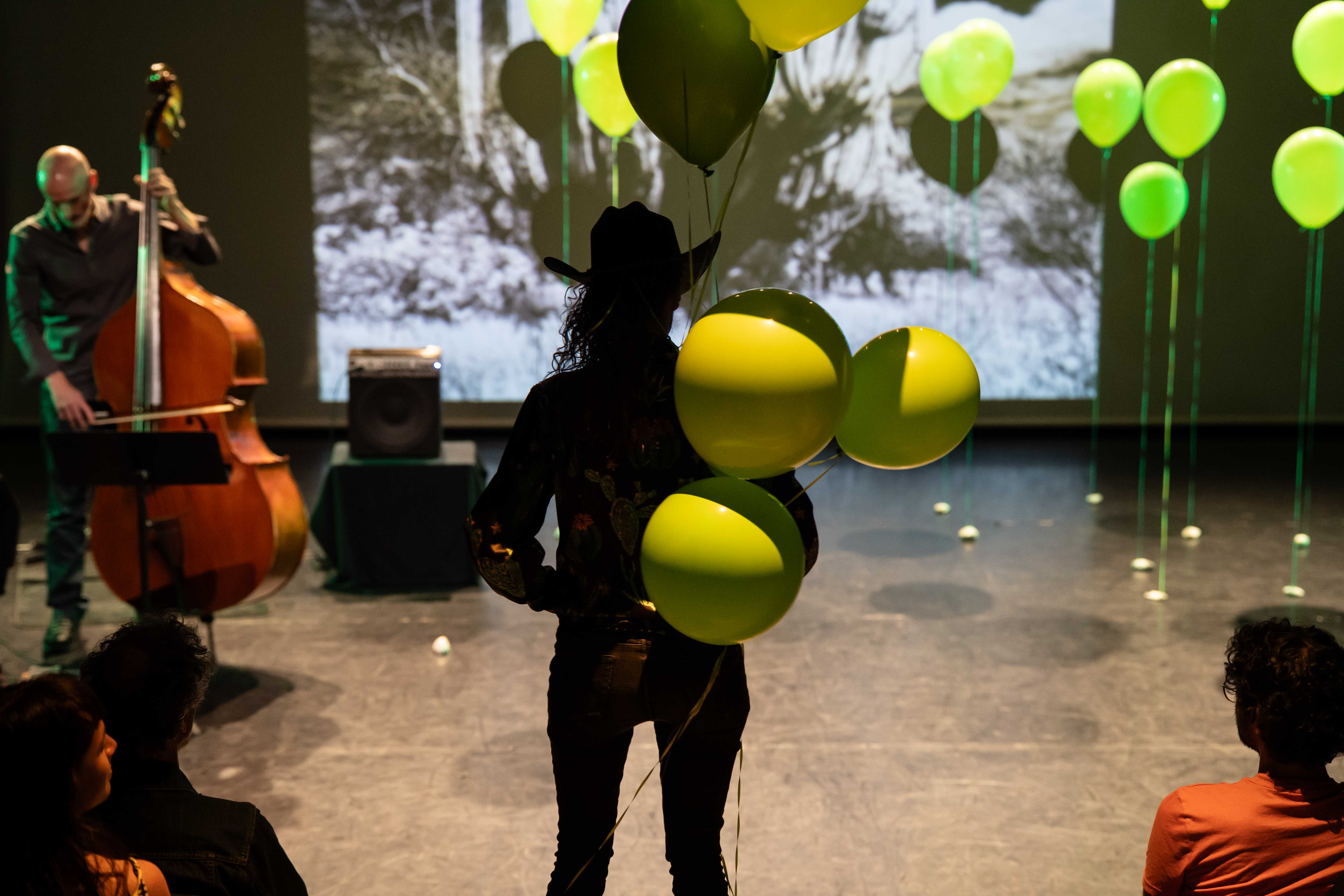
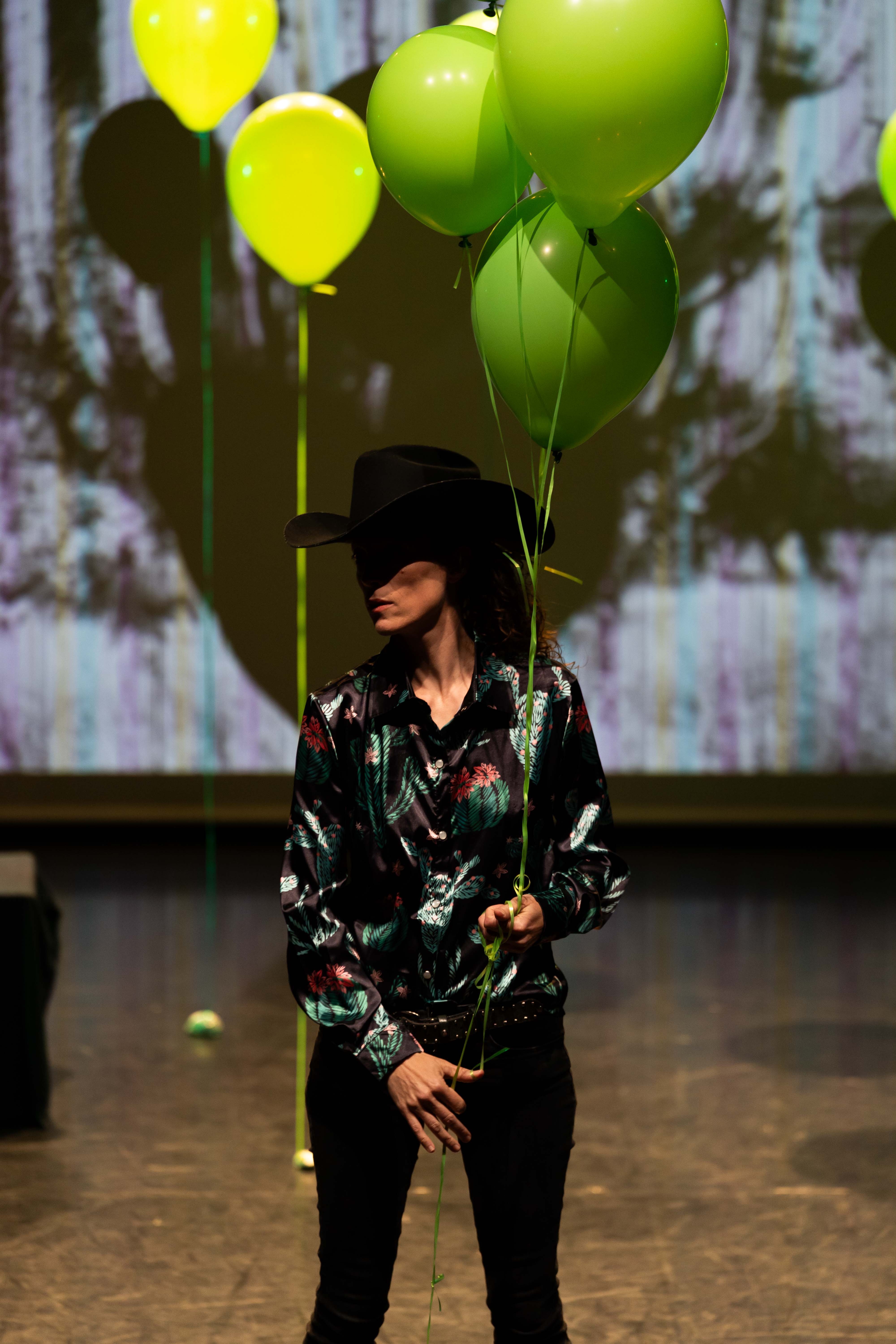
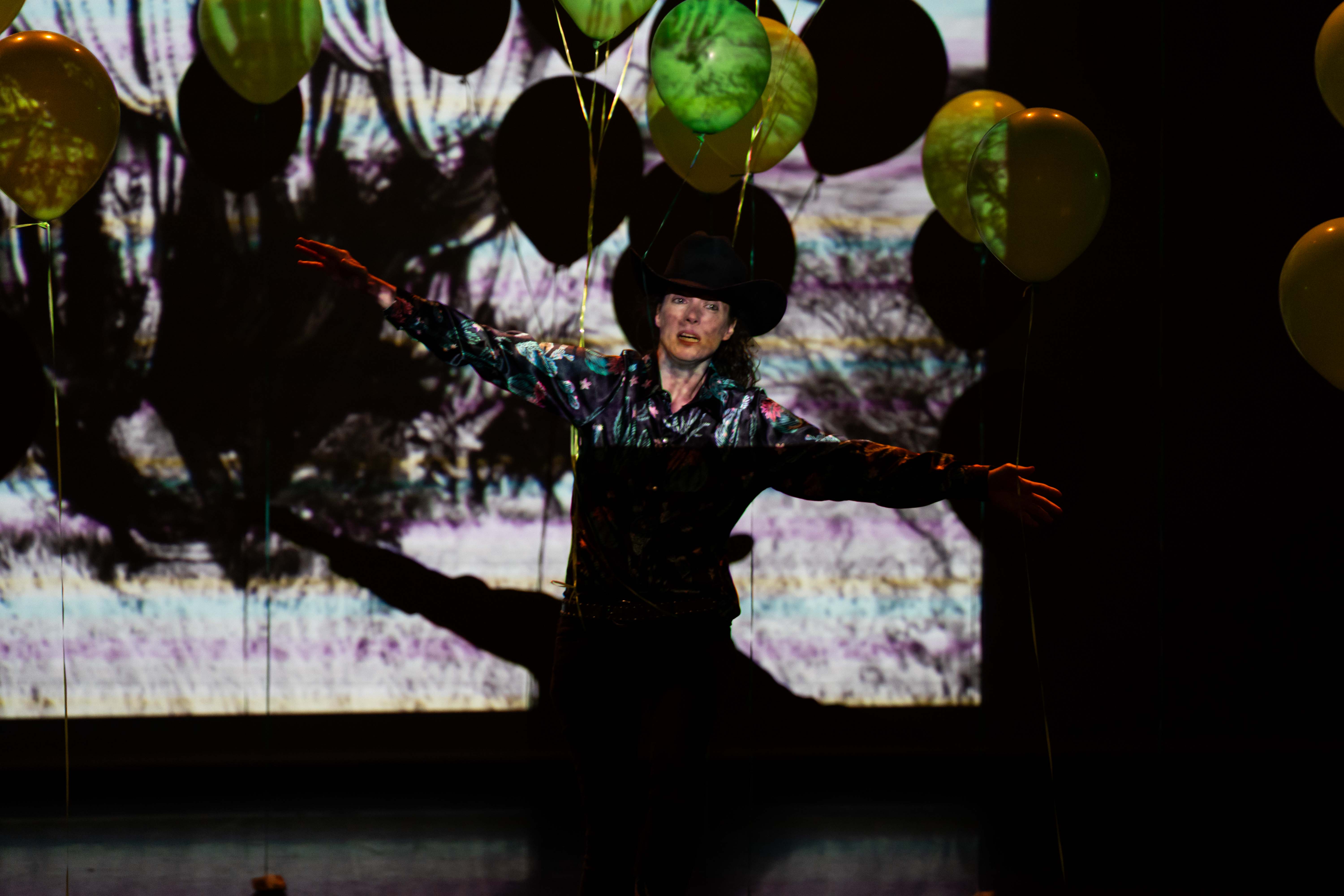
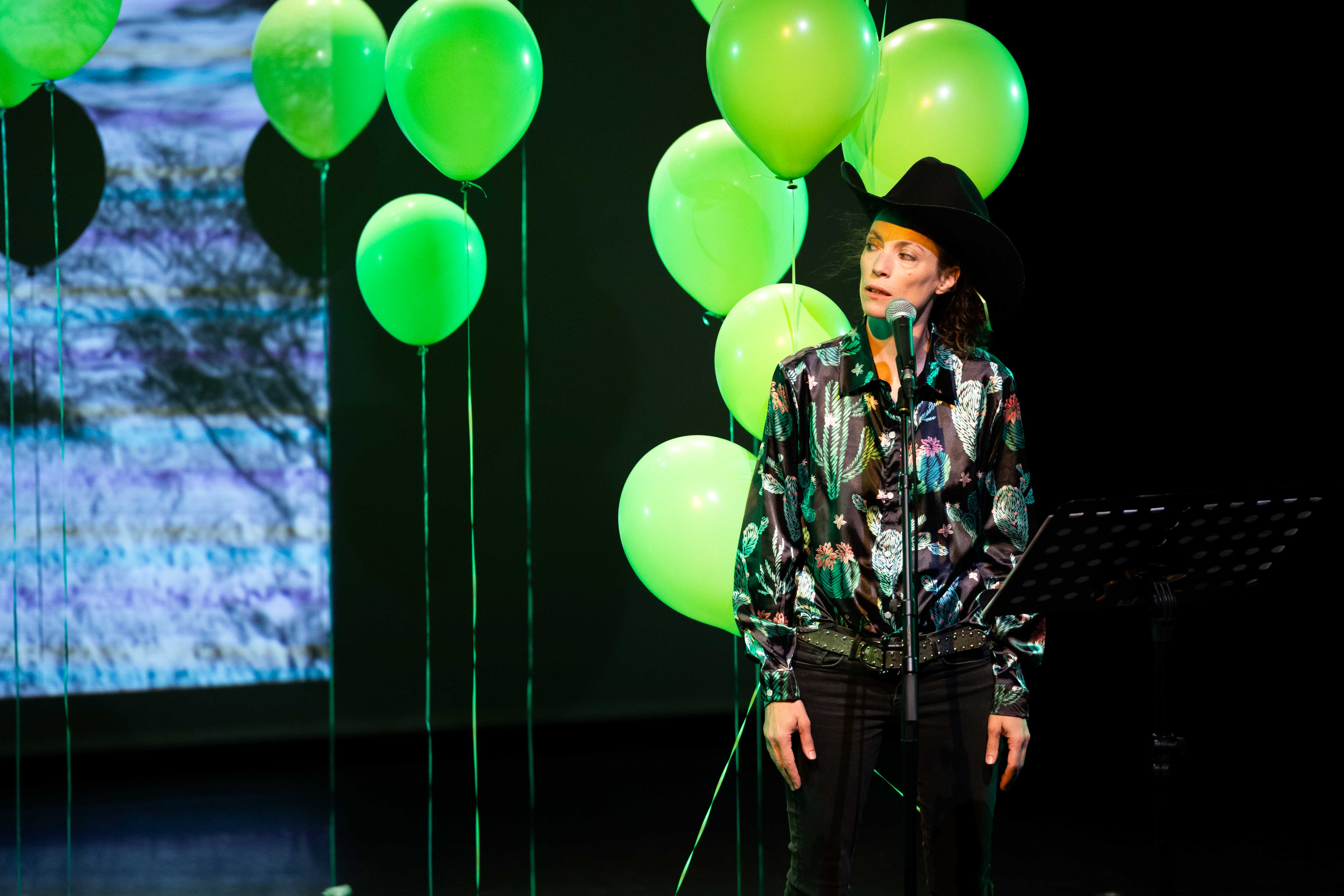
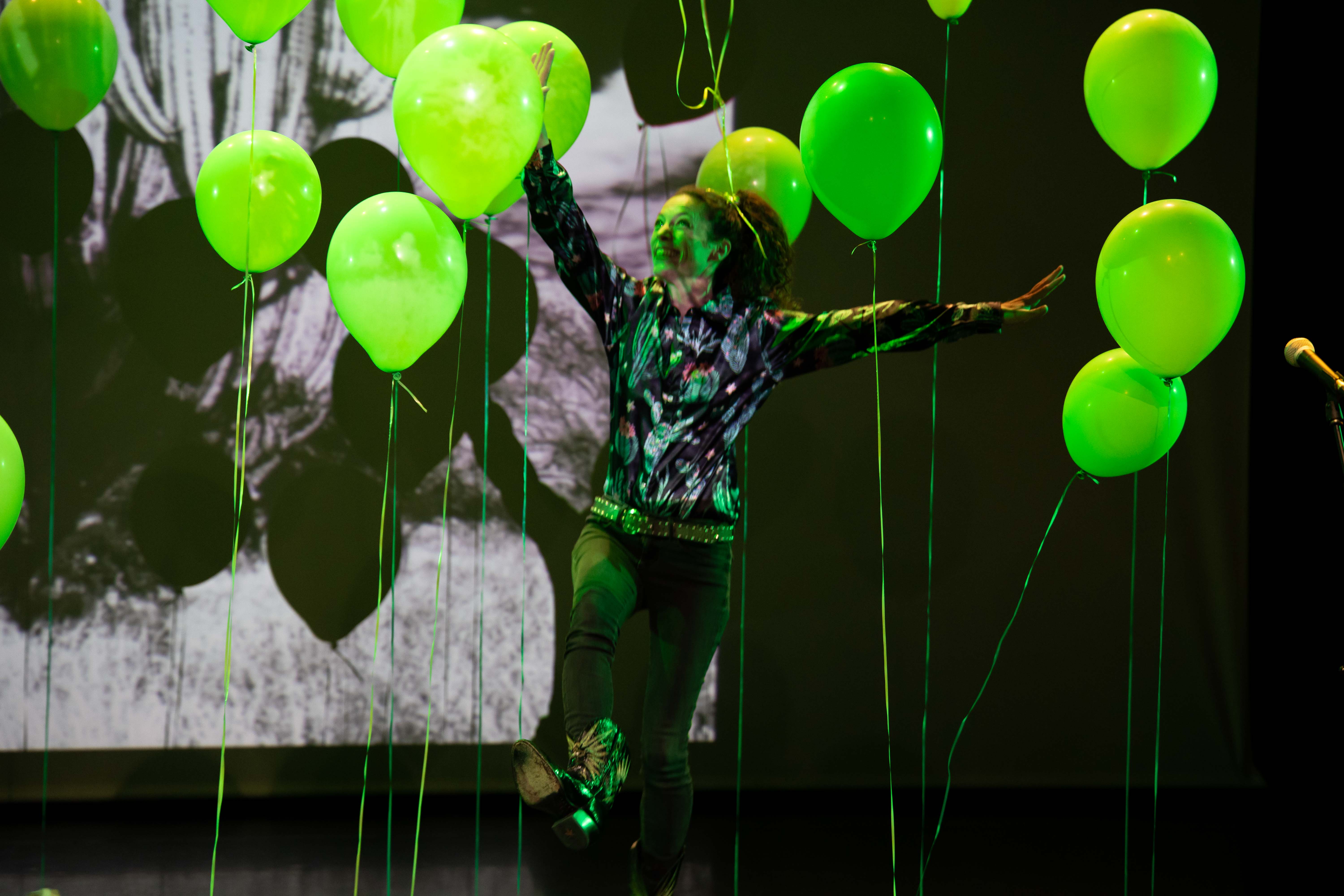
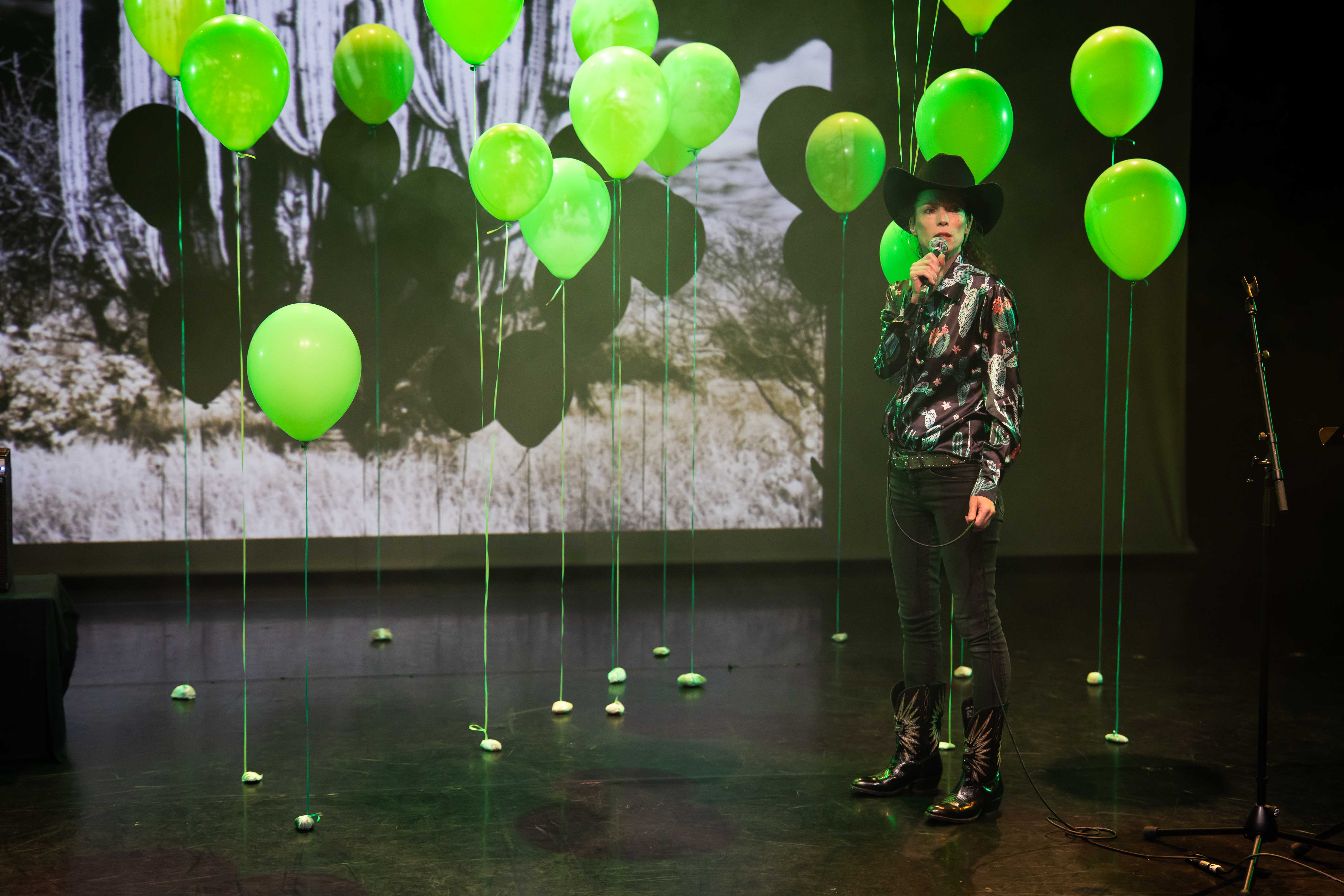
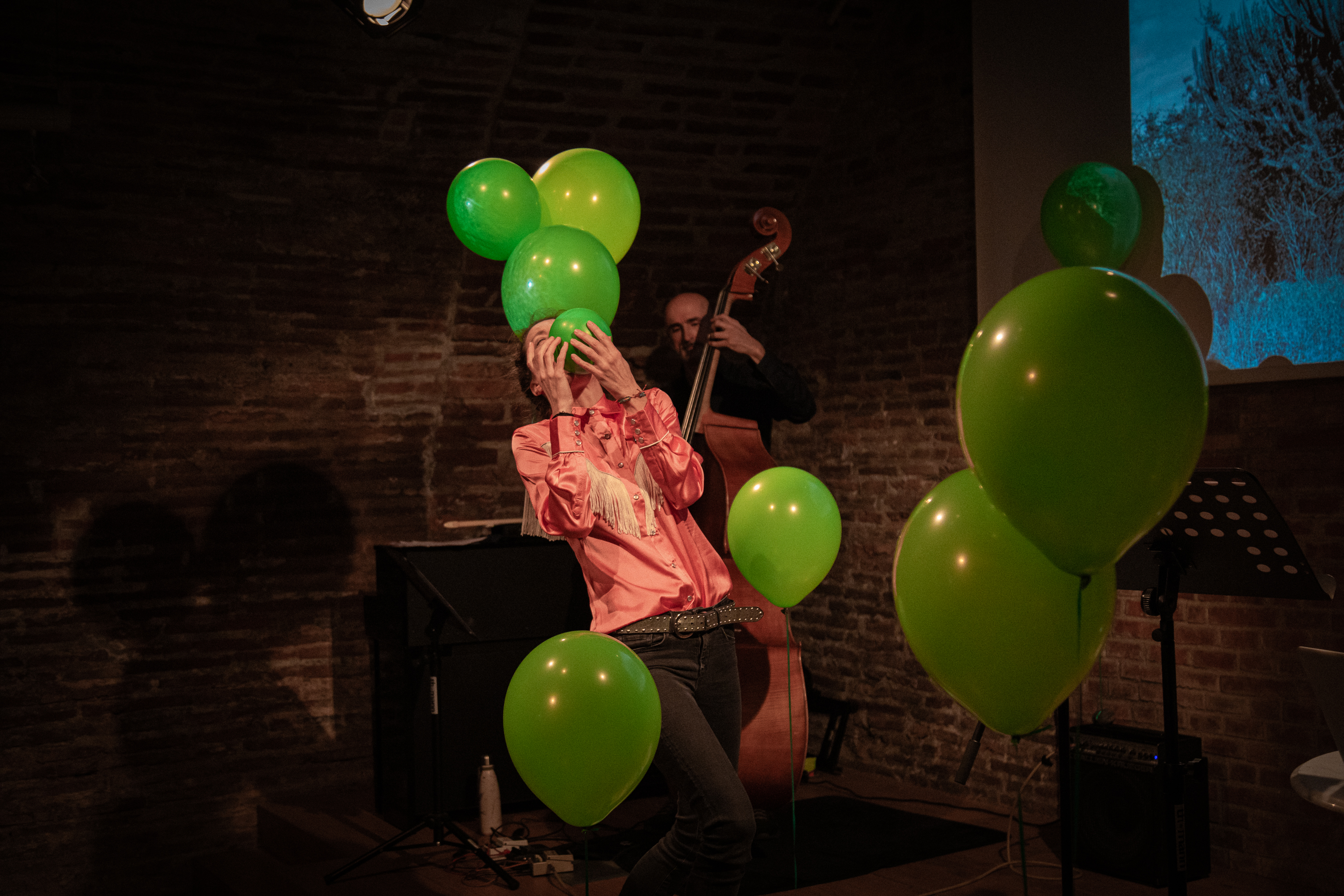
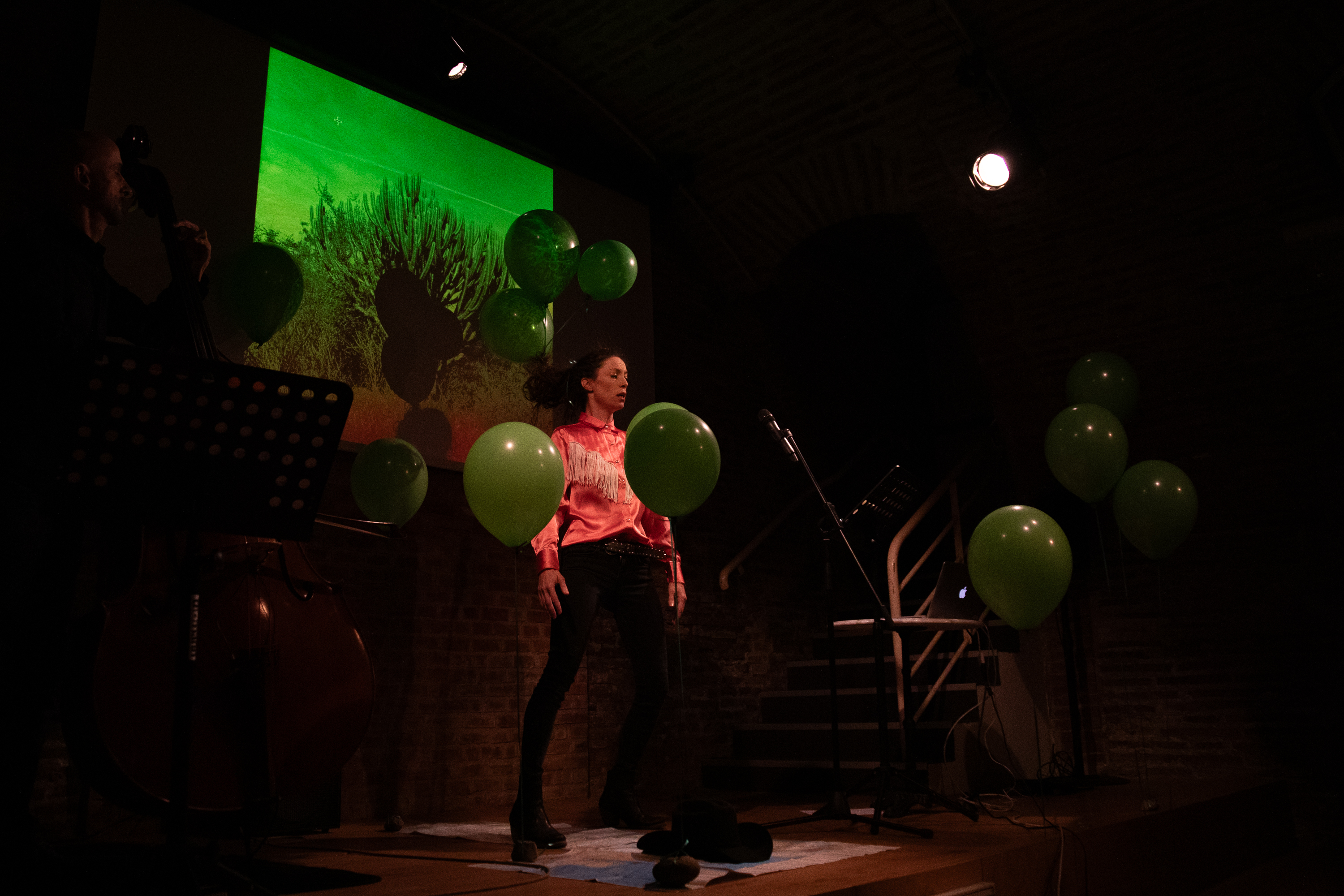
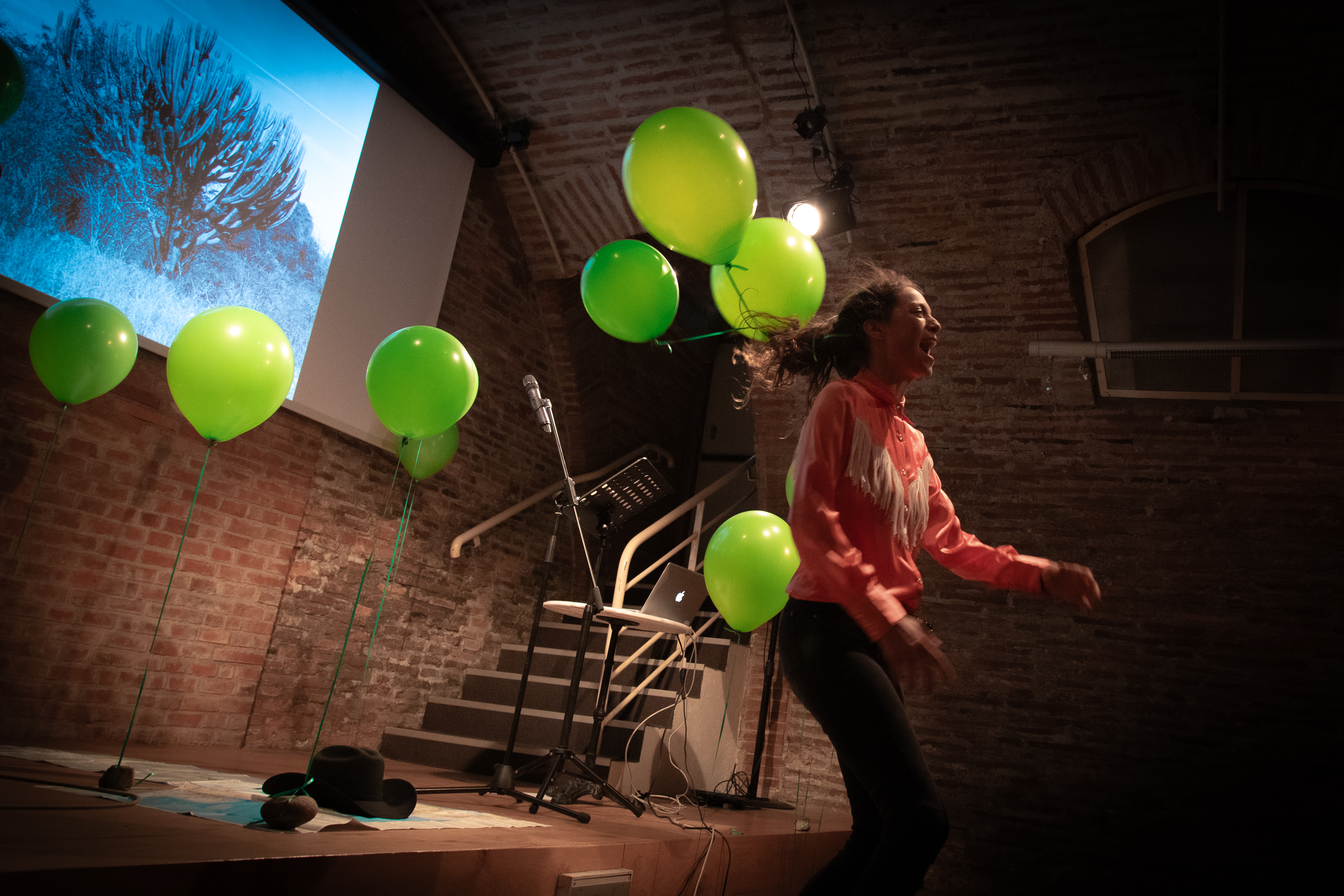
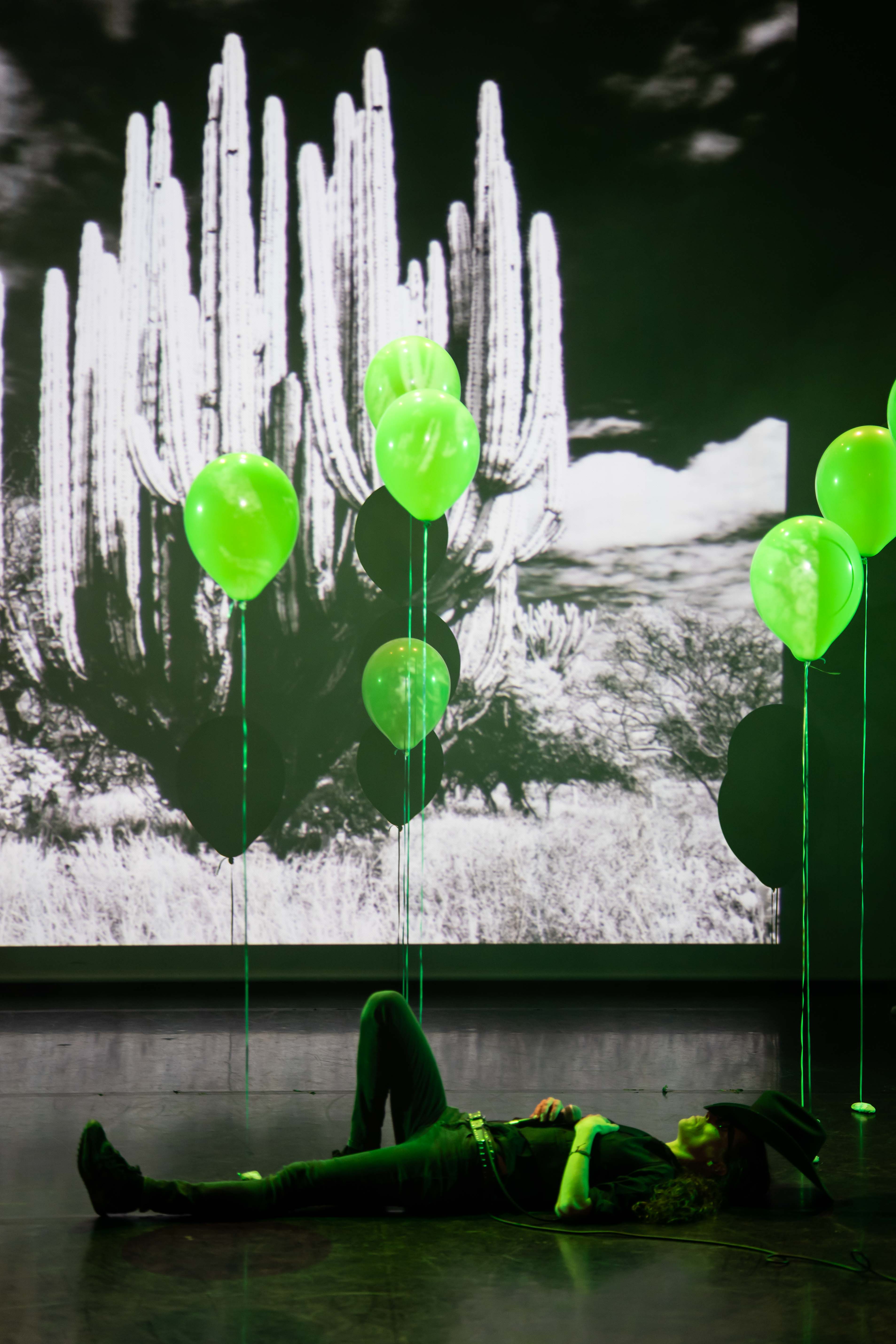
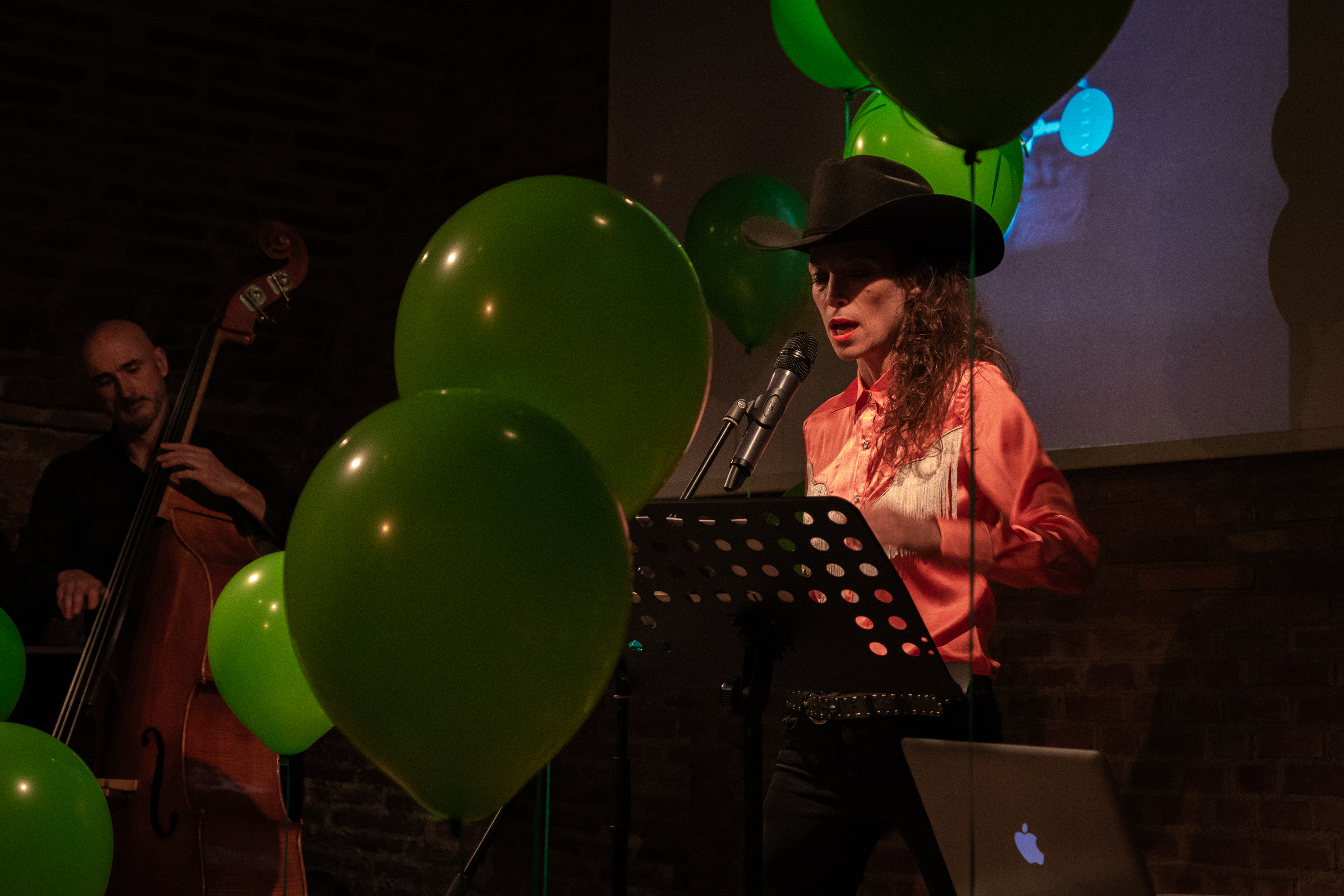
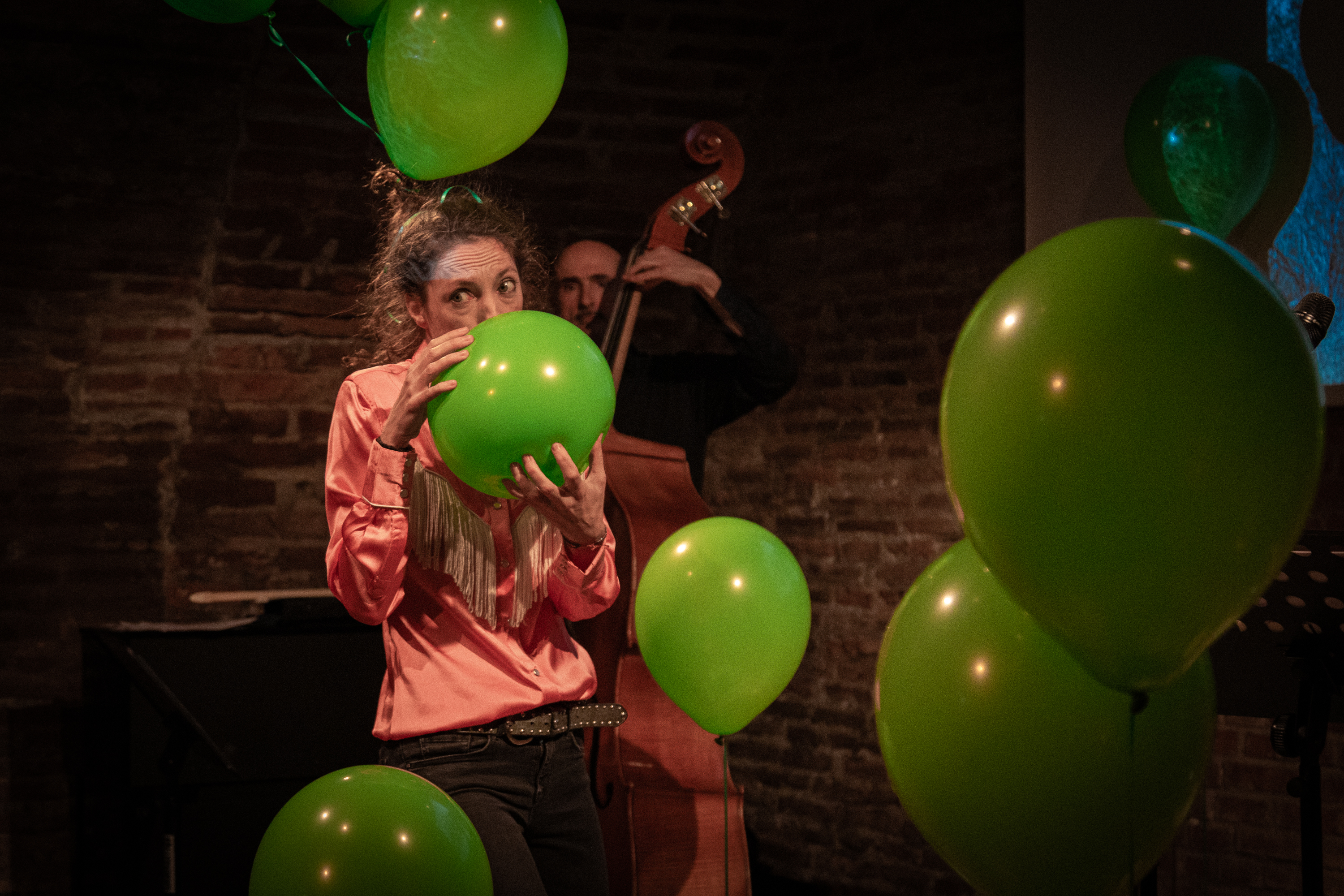
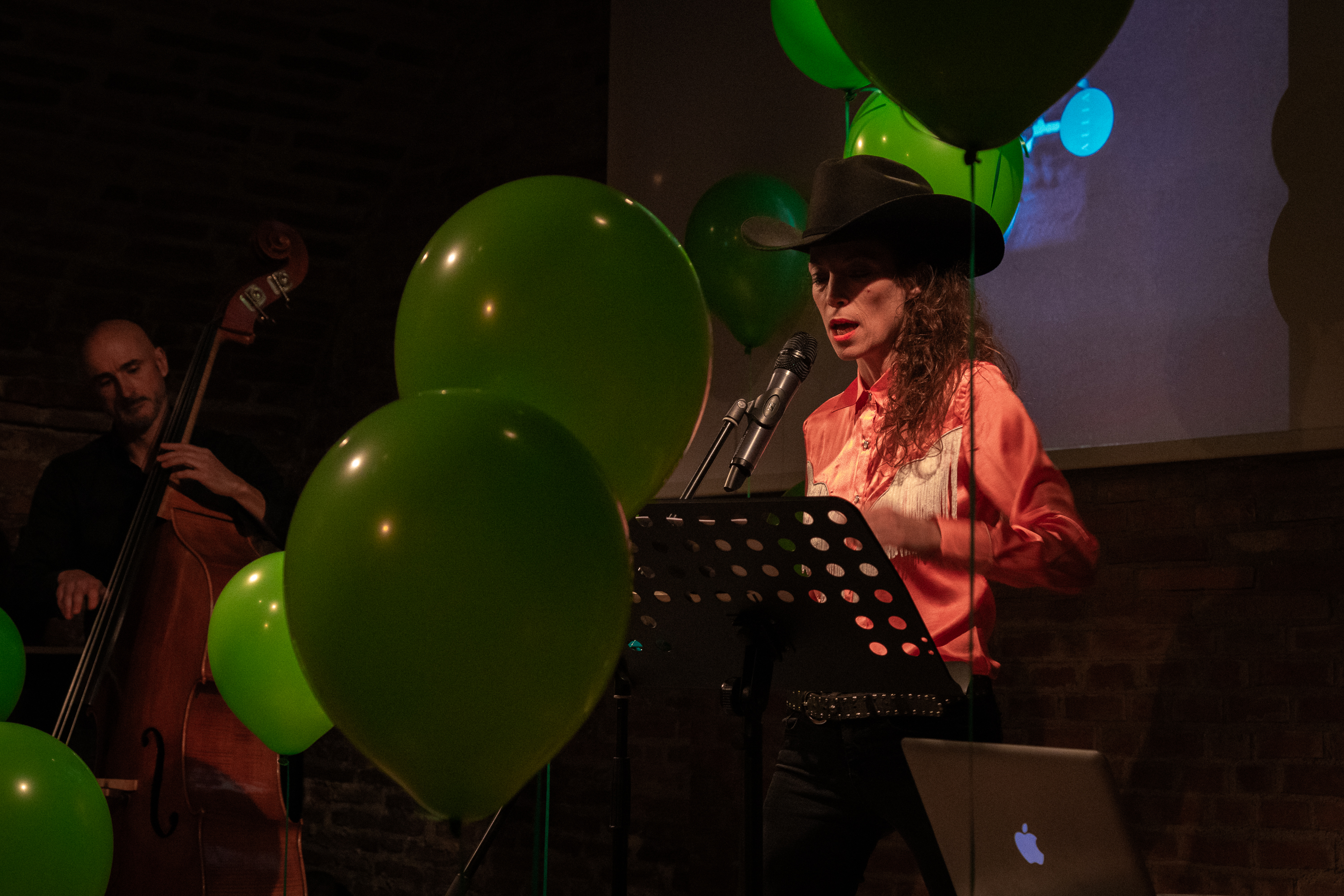
Face au désastre, le plateau devient le laboratoire des « extrémophiles ». Un bloc de glace s’y dresse et fond lentement,s’écoulant comme les glaciers d’une Terre en sursis. Dans cet espace de sédimentation, le corps de l’artiste active un rituel d’aspiration : des ballons d’hélium — élément rare, noble et fuyant, image de l’air vicié — sont ancrés au sol par les mêmes pierres que Virginia Woolf glissa dans ses poches avant de rejoindre la rivière. En aspirant cet hélium, le corps oscille entre le coma, la stupeur et la blessure originelle du Canto Cardenche.
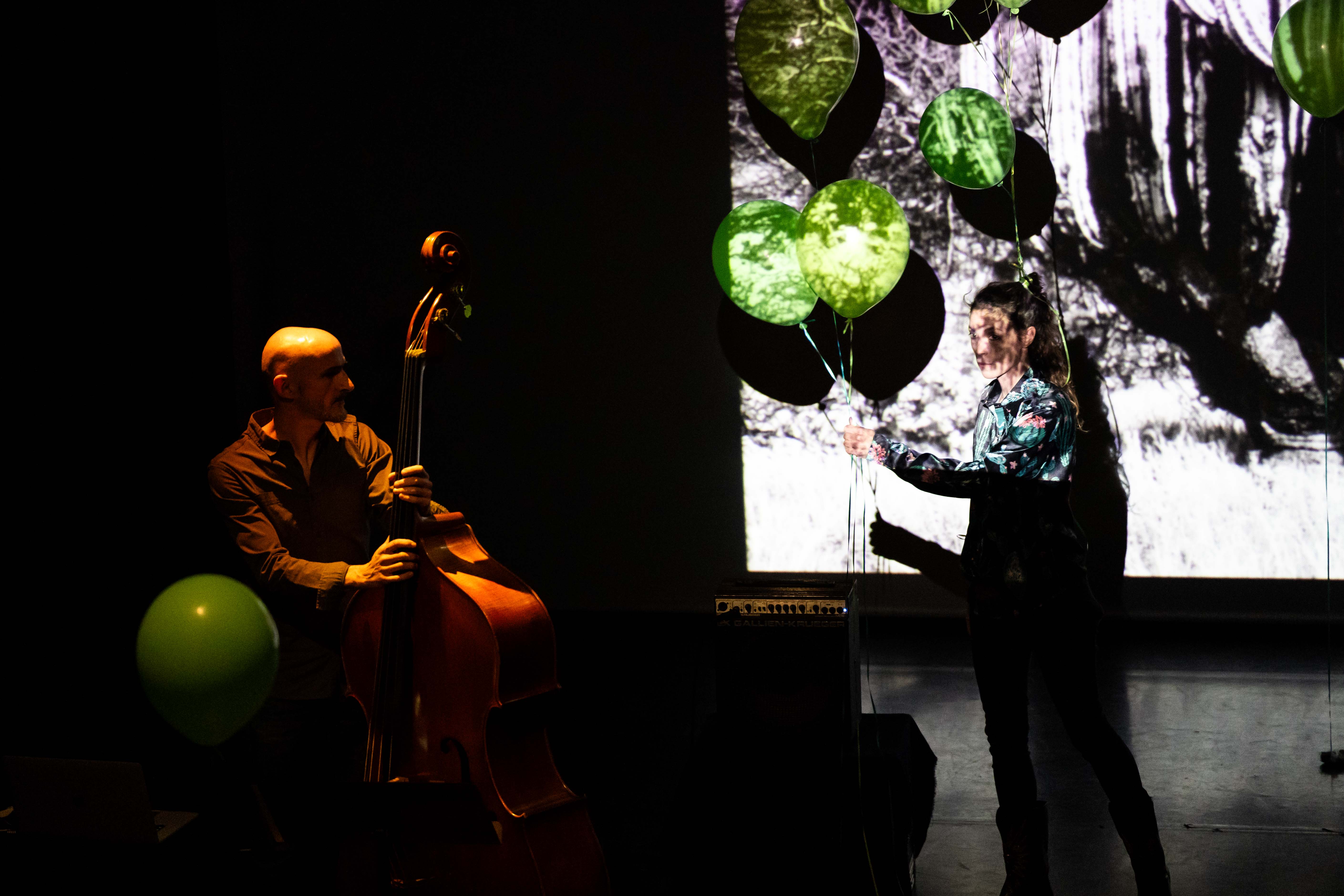
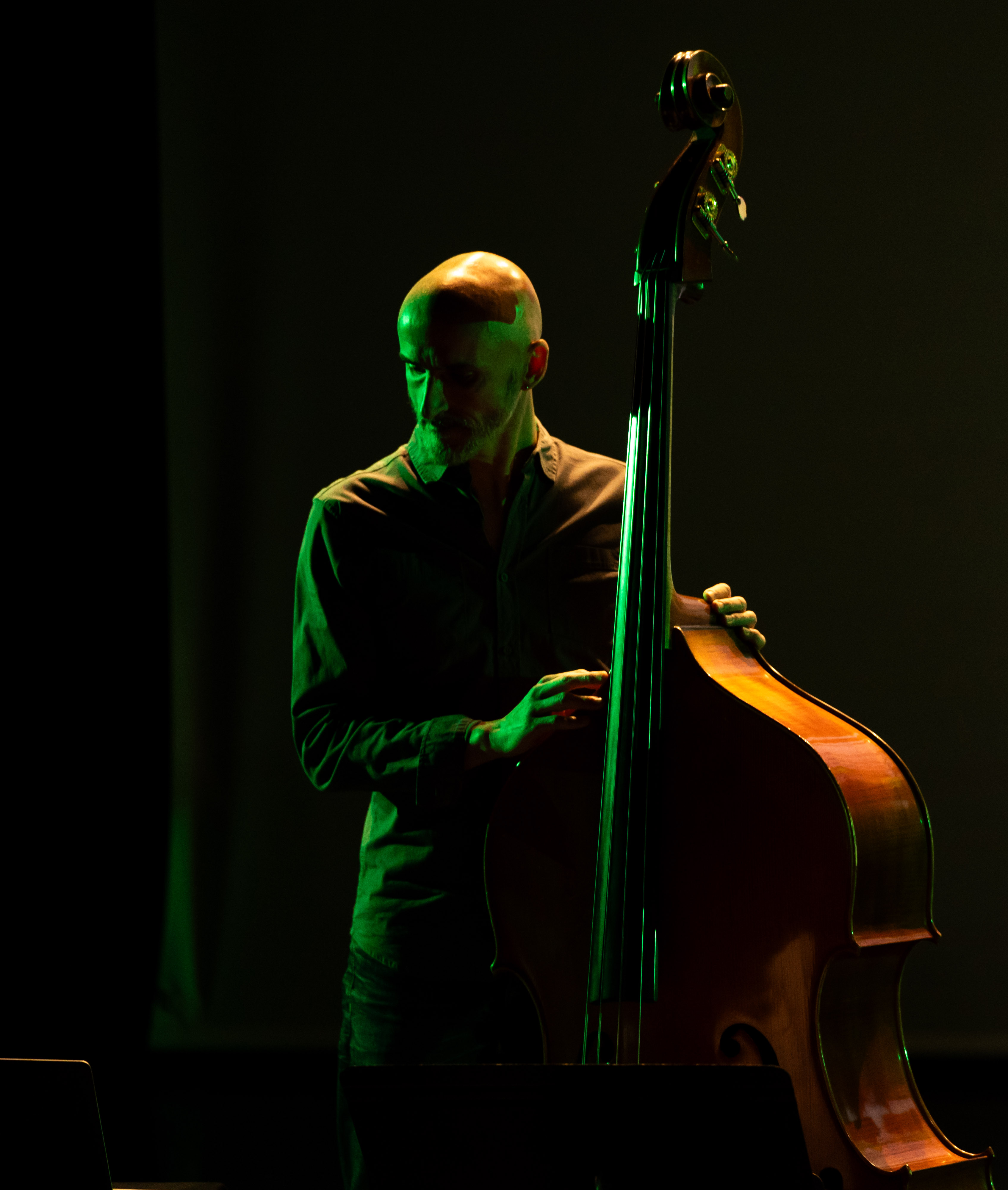
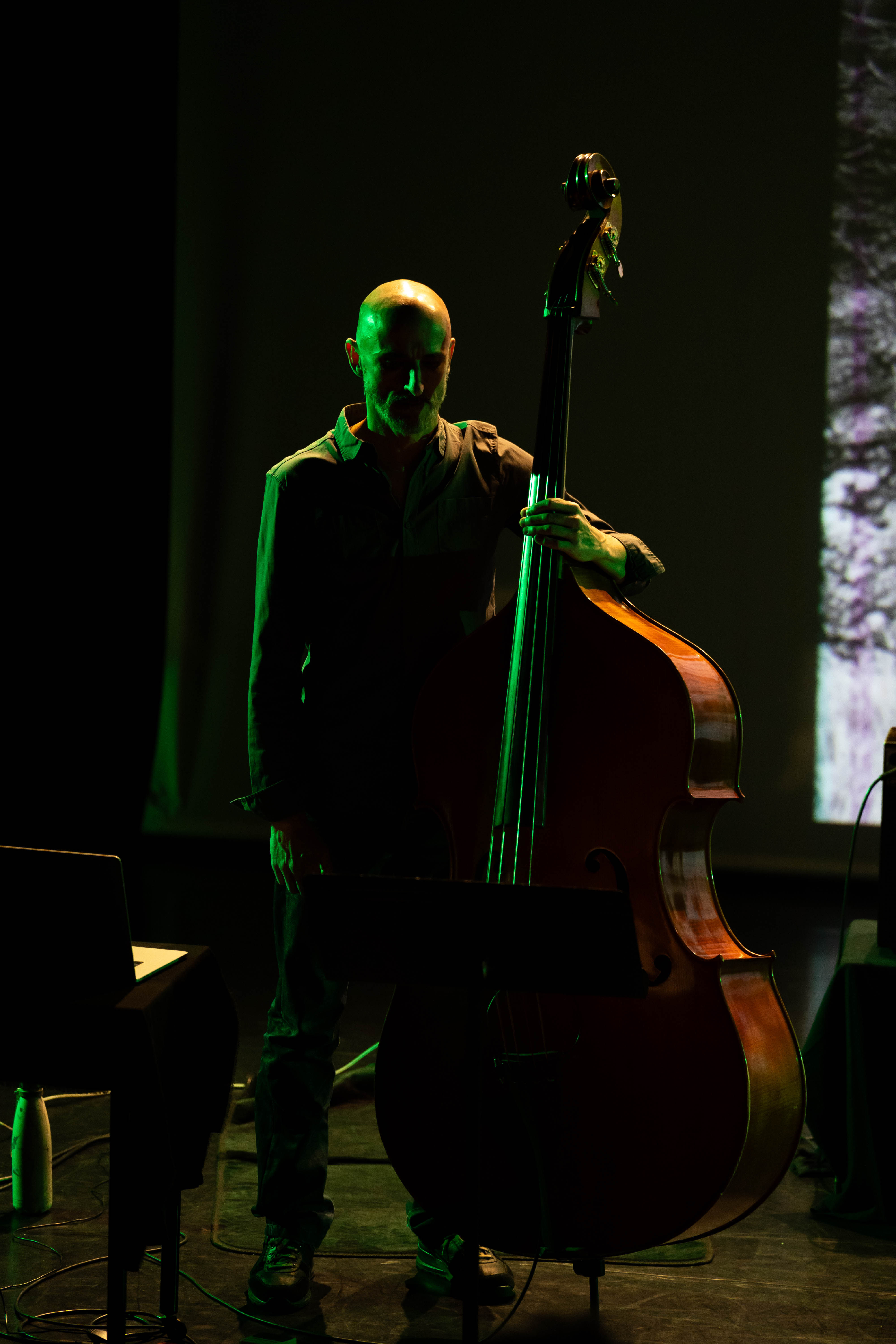
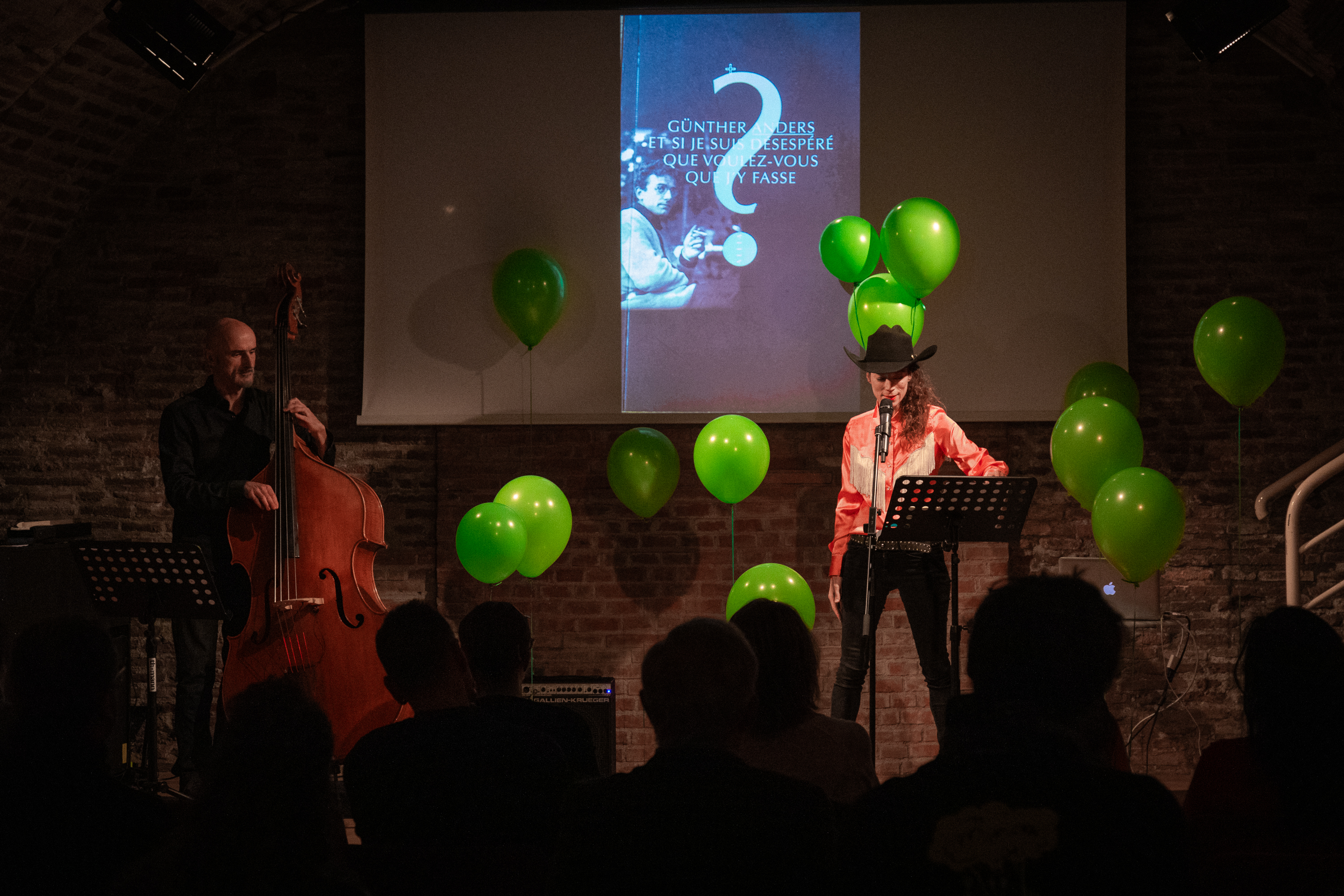
Traversé par la question de Günther Anders au pilote Claude Eatherly (« As-tu le courage de te sentir coupable ? »),interrogeant l’irresponsabilité technique face à l’apocalypse nucléaire et l’auto-extinction du monde, le projet convoque l’esprit de Gustavo Cerati (dont la chanson Cactus, née à Monterrey, innerve la partition). Portée par la performance live et les vibrations sismographiques de la contrebasse de Fabrice Camboulive, Survivance Extrême refuse le nihilisme pour déployer une « poétique de la relation » (Édouard Glissant) : un manifeste critique où l’art devient l’espace d’une responsabilité partagée au bord du gouffre.
Distribution, Crédits & Collaborations :
- Conception, écriture et performance : Julie Pichavant
- Création sonore et interprétation live : Fabrice Camboulive
- Création lumière : Fabien Le Prieult (Visages Vagabonds / Espace Roguet)
- Investigation photographique et archives visuelles : Antonio Juárez Caudillo
- Crédits photographiques et diffusion : Cécile Flahaut, Vincent Dubus / La Fabrick (Millau)
- Goethe-Institut de Toulouse : Caroline Bertin, Théo Bouyssi
Partenaires & Coproducteurs : IFAL (Institut Français d’Amérique Latine), Goethe-Institut de Toulouse, Université de Magallanes (UMAG), La Fabrick (Millau), L’Estruch Fàbrica de Creació (Sabadell), Espace Roguet (Département de la Haute-Garonne), Ville de Toulouse, Semaine de l’Amérique latine et des Caraïbes, Semaine franco-allemande d’Occitanie.
Écouter la captation sonore de la performance au Goethe-Institut réalisée par Luis Mendez sur la plateforme Mém’Audio.
ENGLISH
EXTREME SURVIVAL Multidisciplinary Research-Creation (Live Arts / Art & Science / Forensic Ecology) — 2025
“And if I am desperate, what do you expect me to do about it?” — Günther Anders
Conceptual Statement
Standing at the intersection of performance, post-dramatic theatre, and geopoetic installation, Extreme Survivalinvestigates the radical porosity between human bodies and the wounded landscapes of the Anthropocene. The work is the culmination of a long-term investigation conducted across Europe and Latin America—most notably through the research road-trip Cactus in Mexico, carried out alongside photographer Antonio Juárez Caudillo, whose visual archives are projected live as the living memory of the territory.
Facing the disaster, the stage becomes a laboratory for « extremophiles. » A block of ice is set up and slowly melts upon it,flowing like the glaciers of an Earth in suspension. Within this space of sedimentation, the artist’s body activates a ritual of inhalation: helium balloons—a rare, noble, and elusive element representing vitiated air—are anchored to the ground by the very stones Virginia Woolf placed in her pockets before stepping into the river. By inhaling this helium, the body oscillates between a state of coma, stupor, and the primal wound of the Canto Cardenche.
Inhabited by Günther Anders’ question to pilot Claude Eatherly (“Do you have the courage to feel guilty?”), which confronts technical irresponsibility in the face of the nuclear apocalypse and the world’s self-extinction, the work summons the spirit of Gustavo Cerati (whose song Cactus, composed in Monterrey, permeates the sonic framework).Sustained by the live performance and sismographic vibrations of Fabrice Camboulive’s double bass, Extreme Survivalrejects nihilism in favor of a « poetics of relation » (Édouard Glissant): a critical manifesto where art becomes a space of shared responsibility at the edge of the abyss.
Credits & Collaborations:
- Conception, text, and performance: Julie Pichavant
- Sound design and live performance: Fabrice Camboulive
- Lighting design: Fabien Le Prieult (Visages Vagabonds / Espace Roguet)
- Photographic investigation and visual archives: Antonio Juárez Caudillo
- Photographic credits and diffusion: Cécile Flahaut, Vincent Dubus / La Fabrick (Millau)
- Goethe-Institut Toulouse: Caroline Bertin, Théo Bouyssi
Partners & Co-producers: IFAL (French Institute of Latin America), Goethe-Institut Toulouse, University of Magallanes (UMAG), La Fabrick (Millau), L’Estruch Fàbrica de Creació (Sabadell), Espace Roguet (Haute-Garonne Department), City of Toulouse, Latin America and Caribbean Week, Occitanie Franco-German Week.
Listen to the sound recording of the performance at the Goethe-Institut by Luis Mendez via the Mém’Audio platform.
ESPAÑOL
SUPERVIVENCIA EXTREMA Investigación-creación pluridisciplinar (Artes vivas / Arte y Ciencia / Ecología forense) — 2025
«¿Y si estoy desesperado, qué queréis que le haga?» — Günther Anders
Nota de intención conceptual
En la encrucijada entre la performance, el teatro posdramático y la instalación geopoética, Supervivencia Extremainterroga la porosidad radical entre los cuerpos y los territorios heridos del Antropoceno. La obra materializa el resultado de una investigación a largo plazo desarrollada entre Europa y América Latina, destacando el recorrido de investigación Cactus en México junto al fotógrafo Antonio Juárez Caudillo, cuyas archivos visuales se proyectan en directo como la memoria viva del paisaje.
Frente al desastre, el escenario se convierte en el laboratorio de «extremófilos». Un bloque de hielo se levanta y se funde lentamente sobre él, fluyendo como los glaciares de una Tierra en suspenso. En este espacio de sedimentación, el cuerpo de la artista activa un ritual de aspiración: globos de helio —elemento raro, noble y esquivo, imagen del aire viciado— anclados al suelo por las mismas piedras que Virginia Woolf introdujo en sus bolsillos antes de adentrarse en el río. Al aspirar este helio, el cuerpo oscila entre el coma, el estupor y la herida original del Canto Cardenche.
Atravesado por la pregunta de Günther Anders al piloto Claude Eatherly («¿Tienes el valor de sentirte culpable?»), que cuestiona la irresponsabilidad técnica ante el apocalipsis nuclear y la autoextinción del mundo, el proyecto convoca el espíritu de Gustavo Cerati (cuya canción Cactus, compuesta en Monterrey, atraviesa la partitura sonora). Sostenida por la interpretación en directo y las vibraciones sismográficas del contrabajo de Fabrice Camboulive, Supervivencia Extremarechaza el nihilismo para desplegar una «poética de la relación» (Édouard Glissant): un manifiesto crítico donde el arte se convierte en el espacio de una responsabilidad compartida al borde del abismo.
Créditos y Colaboraciones:
- Concepción, texto y interpretación: Julie Pichavant
- Creación sonora e interpretación en directo: Fabrice Camboulive
- Diseño de iluminación: Fabien Le Prieult (Visages Vagabonds / Espace Roguet)
- Investigación fotográfica y archivos visuales: Antonio Juárez Caudillo
- Créditos fotográficos y difusión: Cécile Flahaut, Vincent Dubus / La Fabrick (Millau)
- Goethe-Institut de Toulouse: Caroline Bertin, Théo Bouyssi
Socios y Coproductores: IFAL (Instituto Francés de América Latina), Goethe-Institut de Toulouse, Universidad de Magallanes (UMAG), La Fabrick (Millau), L’Estruch Fàbrica de Creació (Sabadell), Espace Roguet (Departamento de Alto Garona), Ciudad de Toulouse, Semana de América Latina y el Caribe, Semana Franco-Alemana de Occitania.
Escuchar la captación sonora de la actuación en el Goethe-Institut realizada por Luis Mendez en la plataforma Mém’Audio.